
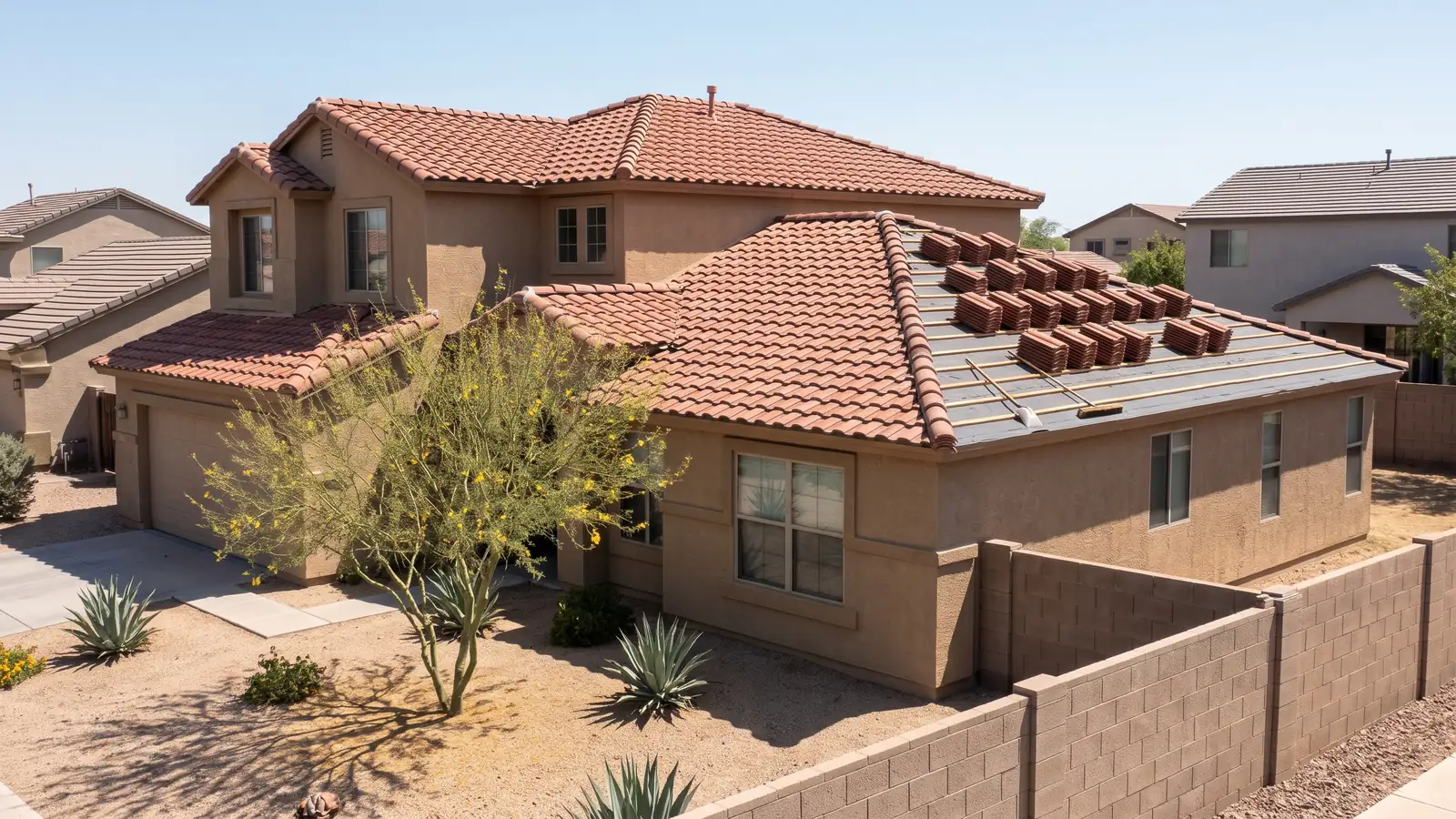
Tile roofing in Gilbert, AZ
Roof Tile Matching in Gilbert, AZ
Census estimates put the median Gilbert home's year built at 2004, with more than half of the town's housing built between 1990 and 2009, so many houses here, and their original roofs, date from the 1990s and 2000s.
- Fit: discontinued profiles generally aren't dimensionally or mechanically compatible with tile made today.
- Exact match: matching color, texture and profile exactly is usually only possible from salvage stock.
- Scale: an average house carries 1,200 to 2,500+ roof tiles, at 80 to 100+ per square (100 sq ft).
- Code: cracked or broken tile can't be reinstalled, so a re-lay may need some replacement pieces.
Tile Roofing Gilbert passes your photos and address to an independent roofer close by for a tile match, whether you're short three pieces or a whole slope. The tile counts come from a national cost guide, not from a look at your roof.
Roof Tile Matching Routes
There are four main routes to a match, listed roughly by how closely each one matches. The right route depends on whether your tile is still in production and how visible the repair is.
Reclaimed Tile Yards
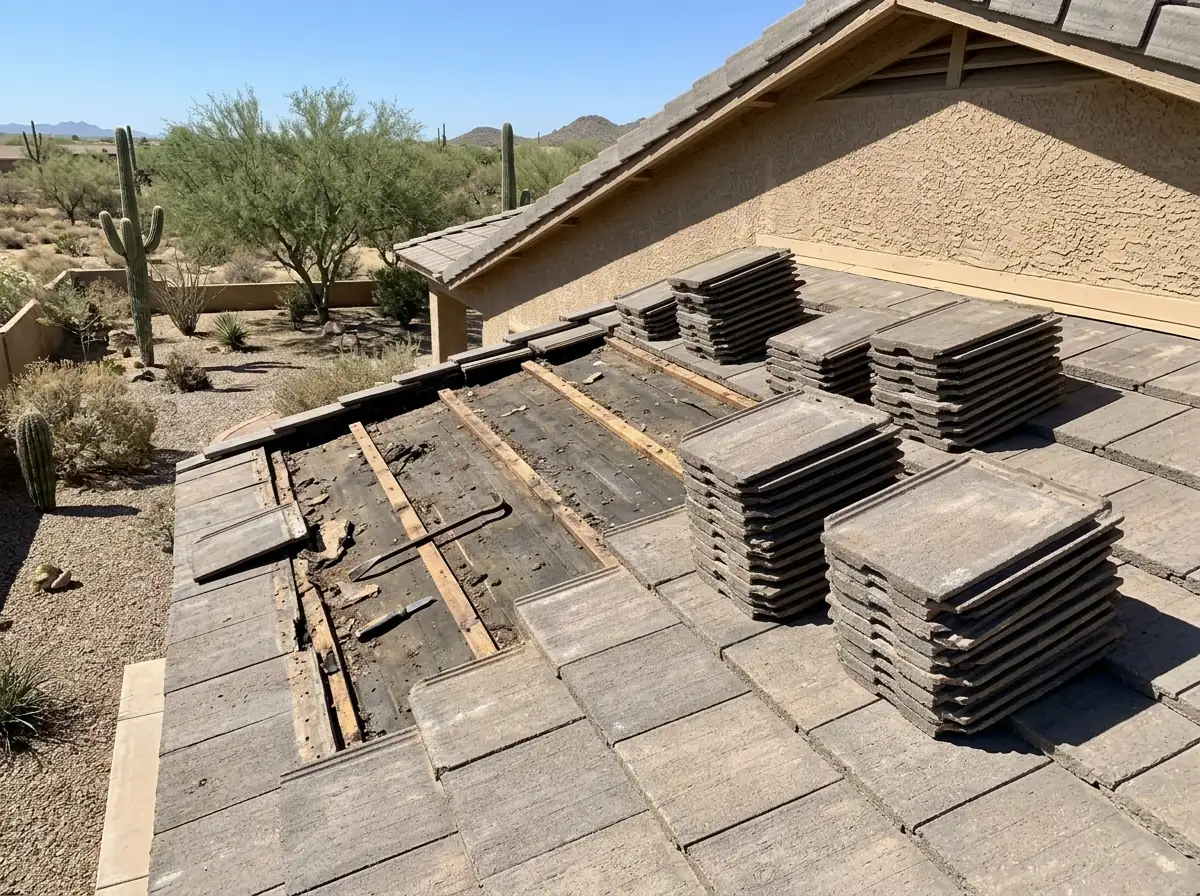
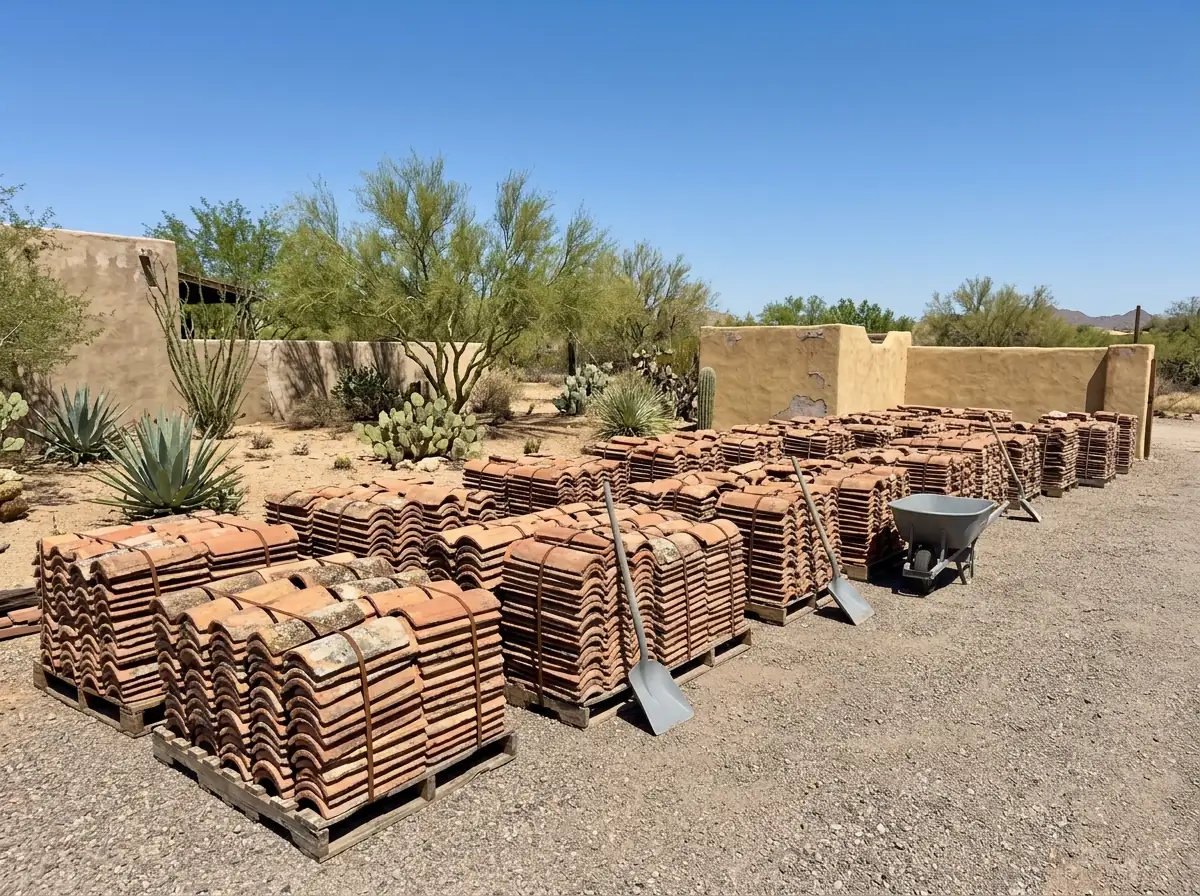
For clay, the used market is real: NIST's clay tile summary, quoted in this page's FAQ, says recovered clay is offered by wholesalers. That note covers clay only, so on a concrete roof your own hidden slopes remain the main salvage source.
Color-Matched New Tile
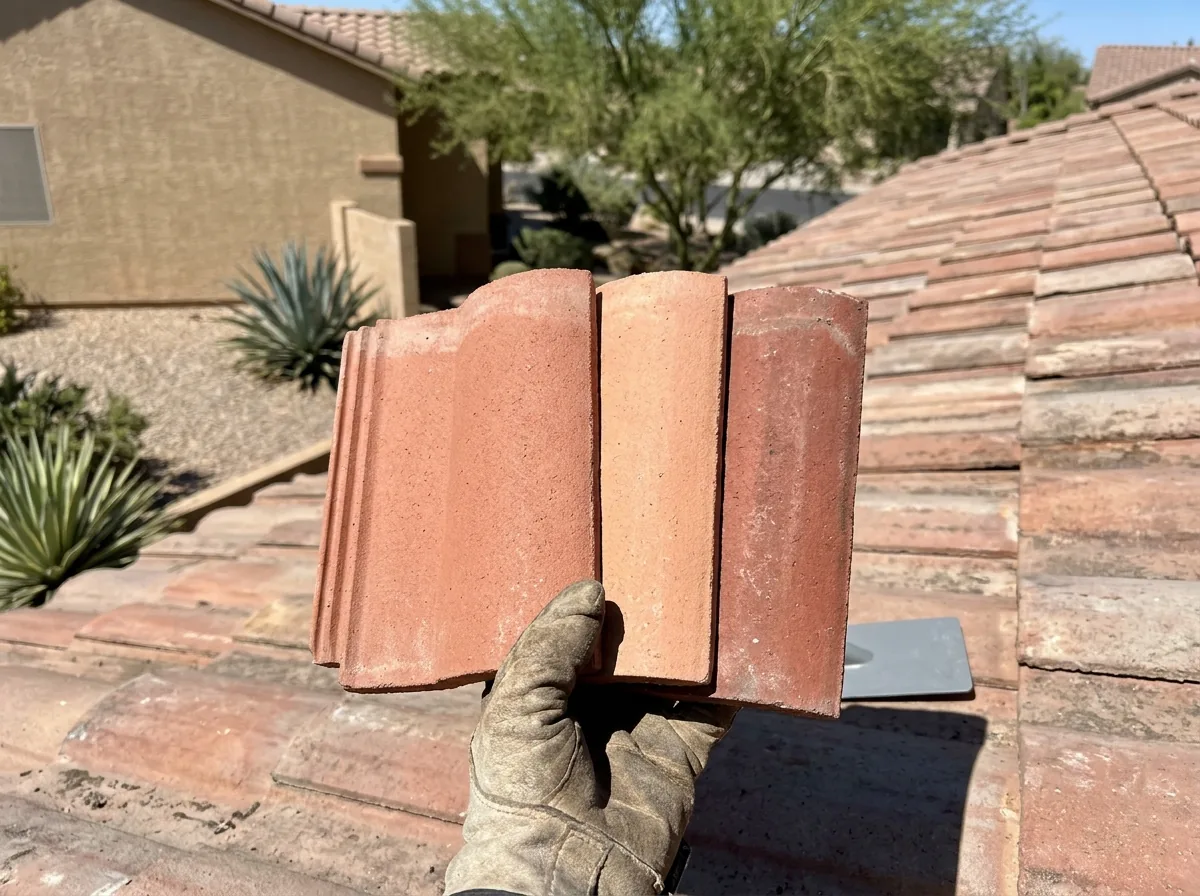
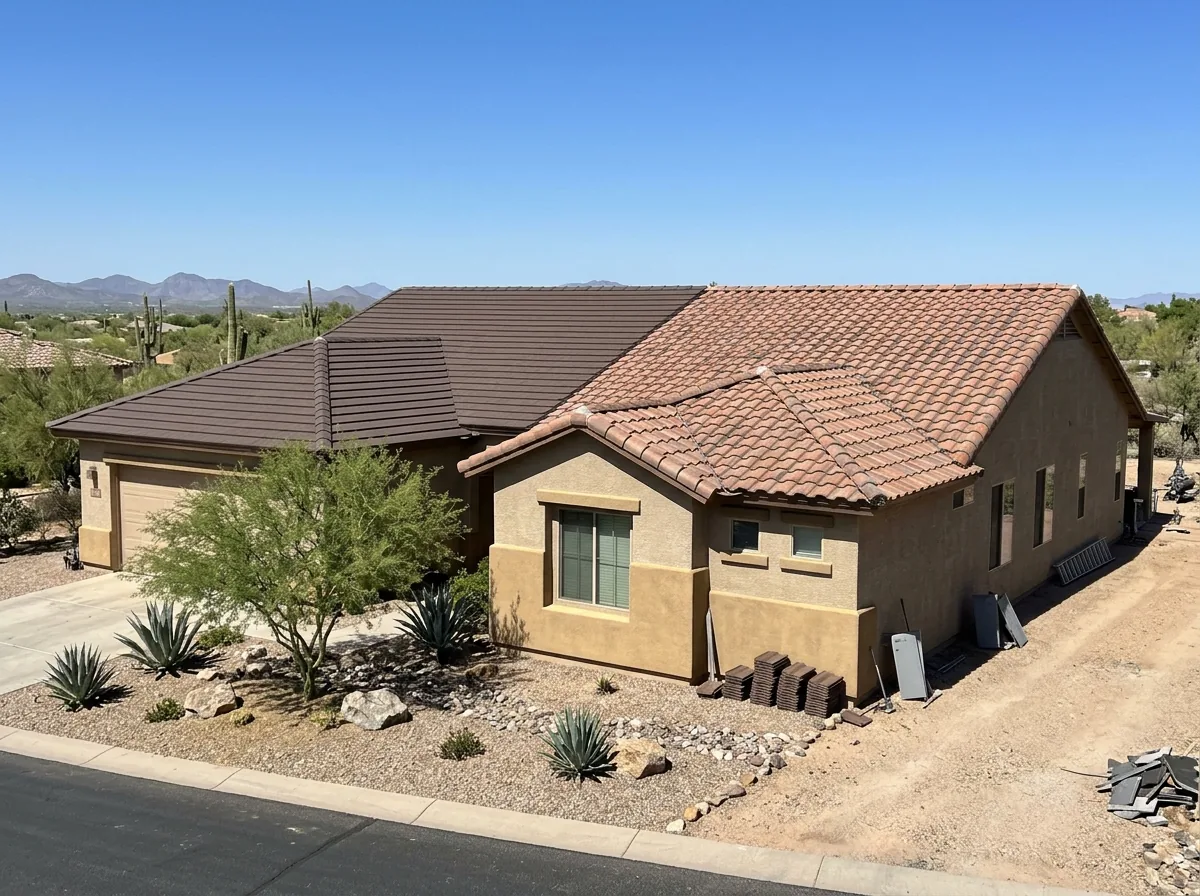
If the profile is still made, new tile in the nearest color is the simplest route. Expect a visible difference at first. TRI says some tile lightens with long exposure, and the concrete surface layer changes in a predictable way, explained on the concrete tile roofing page. HomeGuide lists "may be difficult to match" among concrete tile's drawbacks. Clay holds its color better, as the clay tile roofing page explains. Hold a sample against the roof in daylight before ordering, not against a photo.
Nearest-Profile Substitute or Whole-Slope Swap
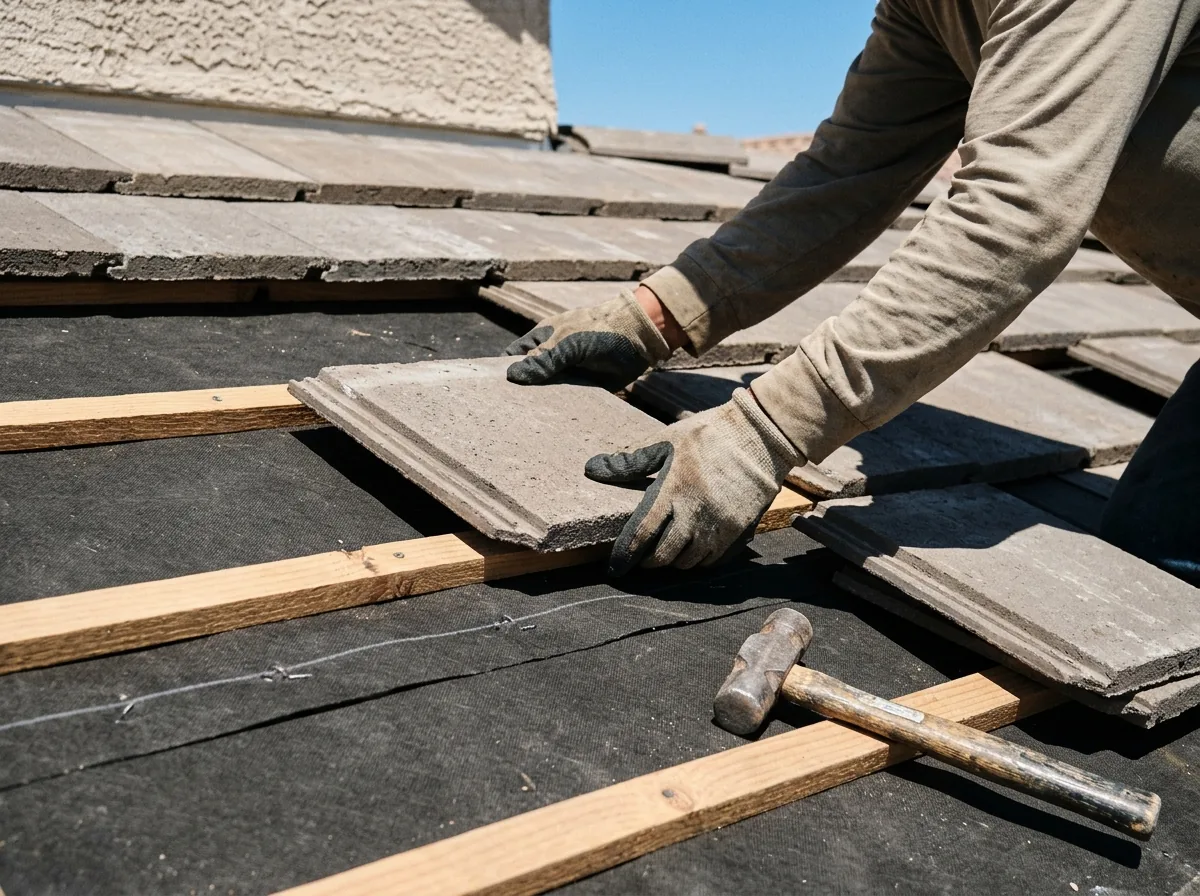
When nothing matches, the bulletin's next step is the closest available alternative. Mixing profiles tile by tile is where trouble starts: TRIA says uplift and fastening can't be validated when discontinued and current profiles are mixed, and that many codes prohibit partial repairs with mismatched or non-interlocking tile. The cleaner answer is a whole-slope swap: put the new profile on one complete roof plane, ideally one out of view, and keep the old tile on the remaining planes.
Discontinued Profiles
The TRI Alliance bulletin names lines that are gone, among them Monier and Lifetile tile, which it says are no longer produced in North America with "only salvage or replication options," plus Eagle's Double Eagle, U.S. Tile's Mission "S" and Redland's clay "Barrel." Its table of about 30 names no longer producing roof tile in North America, mostly companies plus a few product lines, includes Entegra, Hanson, Marley's North American concrete lines and Westile. If your roof is one of these, salvage is the only true match.
Why Gilbert homeowners and HOAs call Tile Roofing Gilbert
- One request goes to one roofer, never to a call list
- Free to send, with nothing to sign until you have a written price
- Ask to see the R-42 or CR-42 license number on the contract
- Ask how many replacement tiles the price allows for
- You pay nothing for the introduction
What to Send for a Tile Match
A good roofer can often name the tile from a photo, but only a clear one. Send:
- STEP01
A wide shot
of the roof from the street, so the roofer sees which slopes are visible. - STEP02
A close-up
of a few tiles in daylight, with a coin or tape measure for scale. - STEP03
The underside
of any loose or broken piece, where a maker's stamp may be. - STEP04
A count
of broken pieces and where they are (what a single swap costs is on the broken roof tile repair page). - STEP05
Any spares
you have, with the label or box if it survived.
For a re-lay, ask in writing how many replacement tiles the bid assumes and where they'll come from. The code won't let cracked tile go back on (the rule is on the underlayment replacement page), and a crew lifting 2,000 tiles may break some. Knowing the plan before the first tile comes off beats hunting for a color in the middle of the job.
Frequently asked questions
We have a box of leftover tile from when the house was built. Is that enough?
It might be, but test a piece first. Concrete tile on the roof has weathered for years and the spares haven't, so lay one next to the roof in daylight. TRI notes that tile lightens to some degree with exposure. If the spare stands out, the salvaged-tile route on this page shows how to use it out of sight.
The roofer says our tile isn't made anymore. Do we need a whole new roof?
Not automatically. The TRI Alliance's discontinued-tile guide walks through it: if the damage is minor and you can source matching tile from salvage or surplus, repair it. If you can't, its flowchart answer is "Replace with closest available alternative or consider reroofing." Full replacement is what it recommends when the integrity of the roof system is compromised.
Can a new tile in a slightly different color just go in among the old ones?
On a hidden slope, often yes. On the front of the house it will show, and a different profile is a bigger problem than color; the nearest-profile section of this page explains why.
How do I find out what tile is on my roof?
Look at the underside of a loose or broken piece. Some tiles carry a maker's stamp; the TRI bulletin, for instance, lists flat tiles stamped "Boral Lifetile BUSA" among discontinued lines. Photograph the stamp, the top surface and the edge profile, and send all three with your request.
Is old clay tile worth anything if we change roofs?
Often, yes. NIST's summary of clay roof tile says used clay is not thrown away: it's reused, resold through wholesalers, or crushed for sports surfaces, and old clay is often valued more than new. Ask the roofer whether your old clay can offset part of the job.