
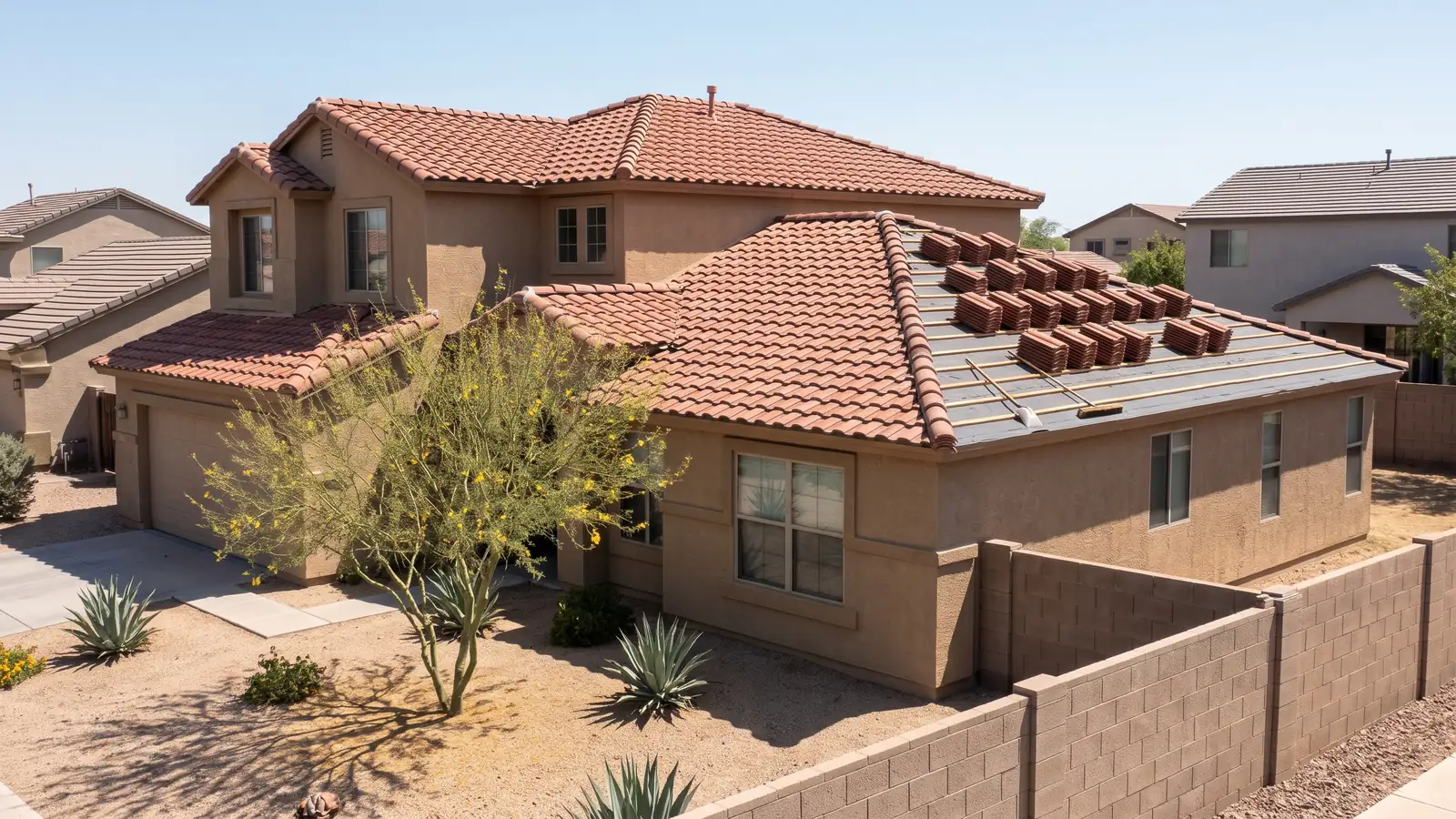
Tile roofing in Gilbert, AZ
Solar Panel Removal and Reinstallation in Gilbert, AZ
- Off and back on: Fixr's national figure for removing and reinstalling 14 to 16 panels is $2,800 to $4,800, roughly $200 to $300 a panel, with the roof work billed separately.
- Removal only: Angi lists a temporary removal for roof replacement or maintenance at $1,000 to $2,000 per job. Its general budget for panel removal, a separate figure, is $200 to $500 per panel.
- Crew time: Fixr estimates 1 to 2 days to disconnect and take the array down, then 2 to 3 days to put it back once the roof is done. The system stays off while the roof work happens in between.
- Mounts on tile: the tile-industry installation manual calls for two layers of flashing at every mount that goes through the tile, one at the tile and one at the deck.
Tile Roofing Gilbert pairs your re-roof with one local roofer. How the solar crew's days fit around the roof work is something to settle with that roofer and your solar company. Every dollar figure above is a national guide number, and panel count, wiring and the tile under the array can move it. The solar company's name and whether the system is owned or leased are worth having on hand, since the panel side may not be the roofer's to schedule.
Solar Panel Removal and Reinstallation by Job
Panels and tile share the same roof but not the same trade. Each job below turns on a hand-off: who takes the array down, where it waits, what happens to the tile underneath and how the mounts get sealed again.
Removal and Storage During a Re-Lay
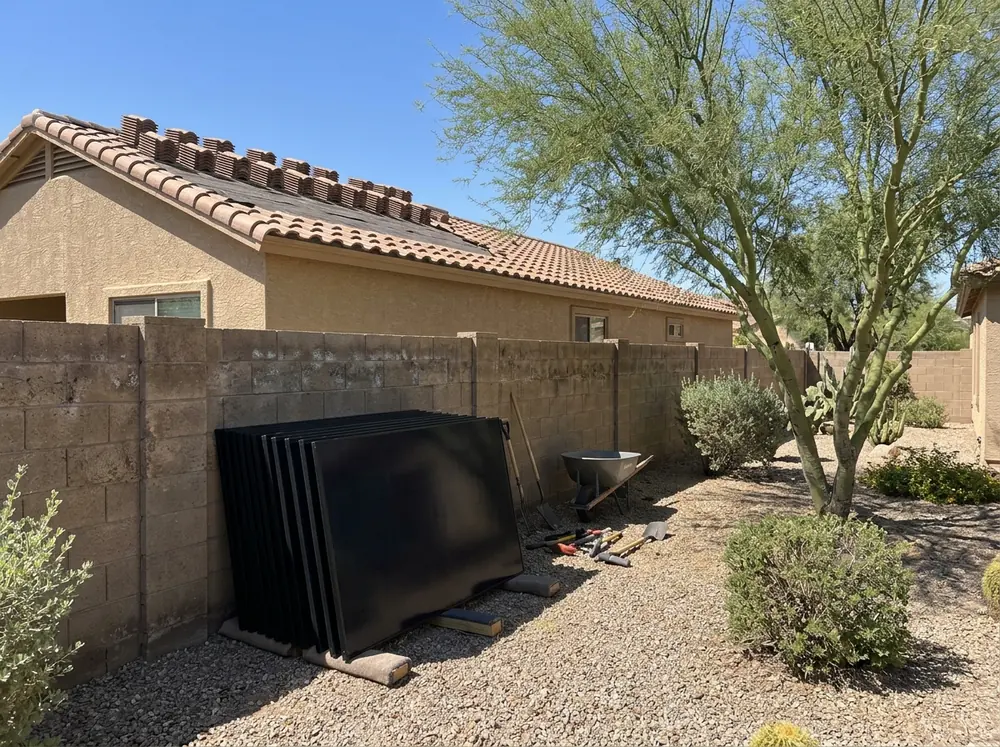
A re-lay under an array starts with the panels. Angi's labor figures give a feel for the scale:
- Small system: 4 to 6 hours to take down.
- Medium system: about a full day.
- Large or complex array: 2 to 3 days.
- Shipment and off-site storage: about $250 on average (Fixr).
The roof work itself is the job described on underlayment replacement. The panels just have to be out of the way first.
Broken Tiles Under an Array
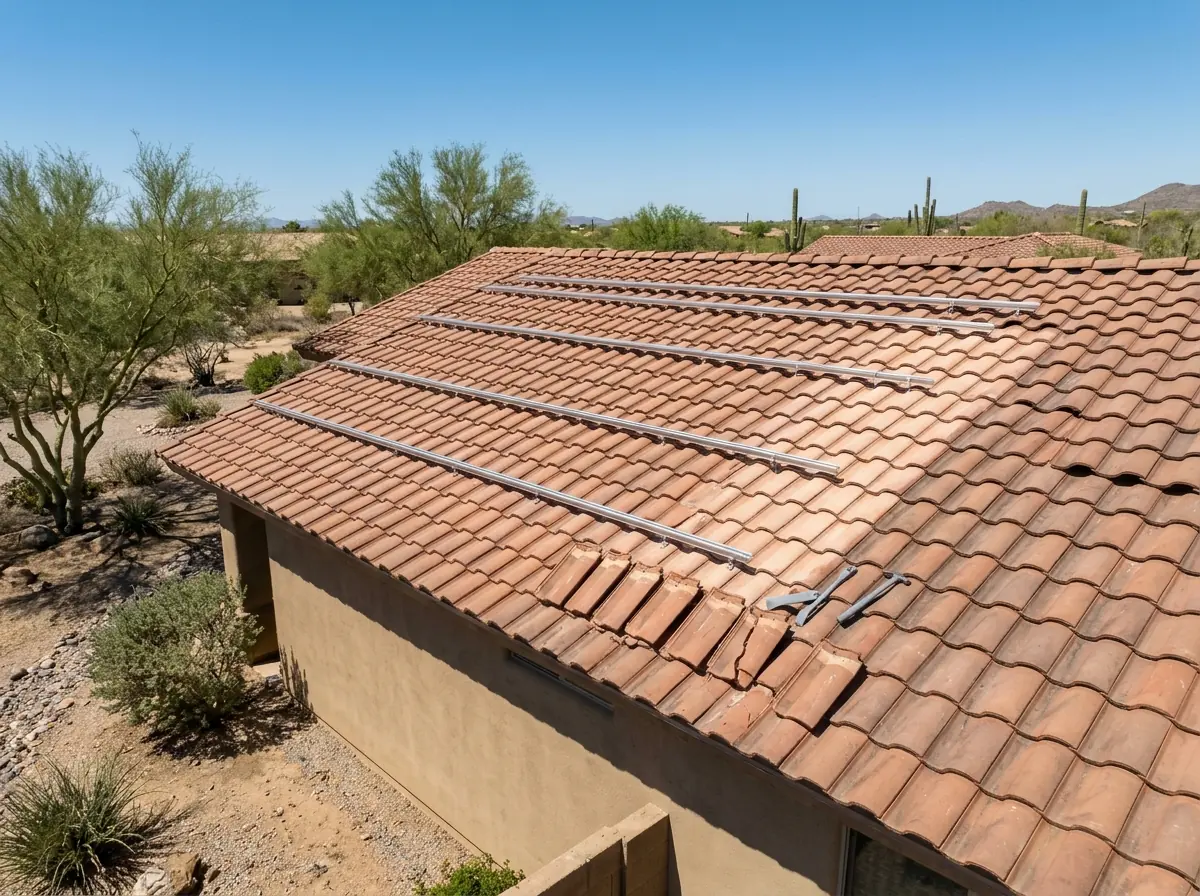
Once the panels are up, ask the roofer to count and photograph any cracked tile under them before quoting the swap. Angi budgets $300 to $1,000 or more for roof work after panel removal, but its examples are general patching (shingle holes, flashing, membranes), not tile swaps; per-tile prices and repair methods are on broken roof tile repair, along with how crews should step on tile.
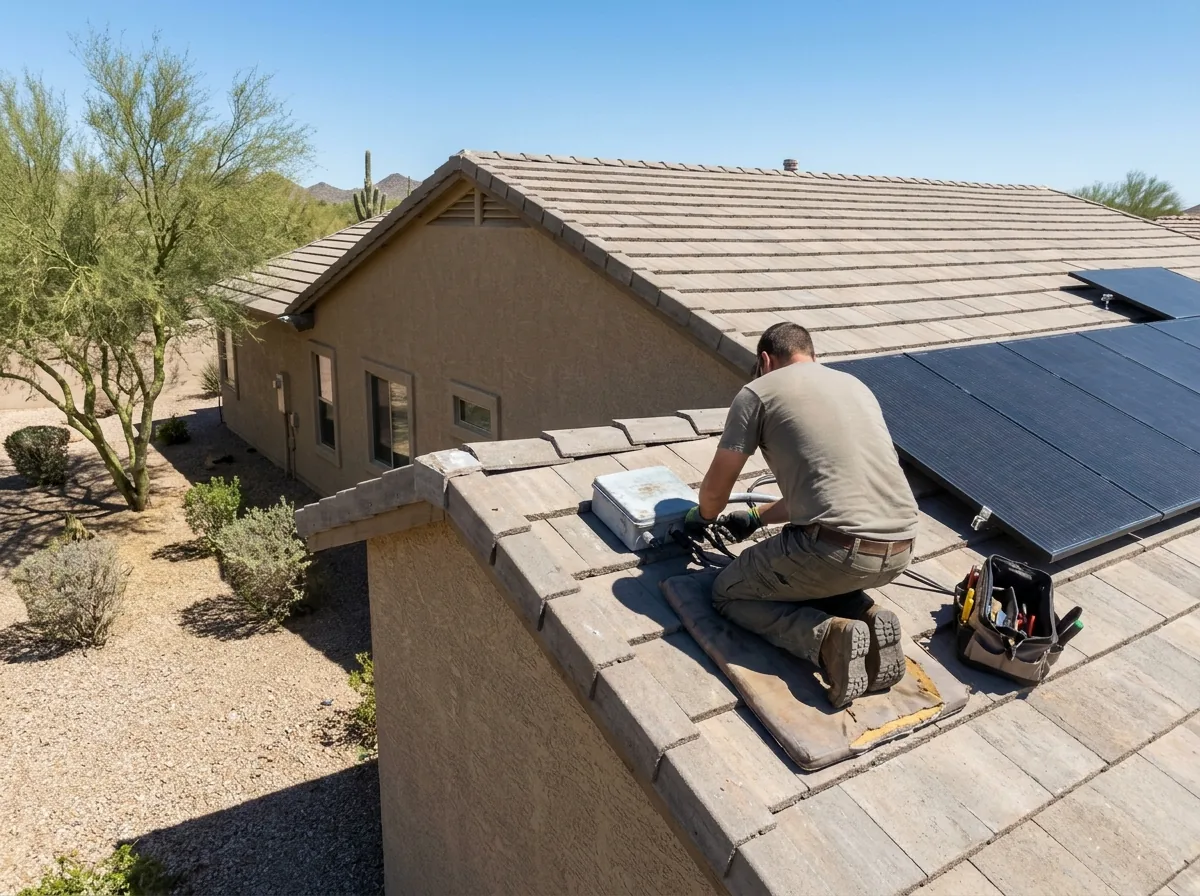
Flashed Tile-Hook Mounts
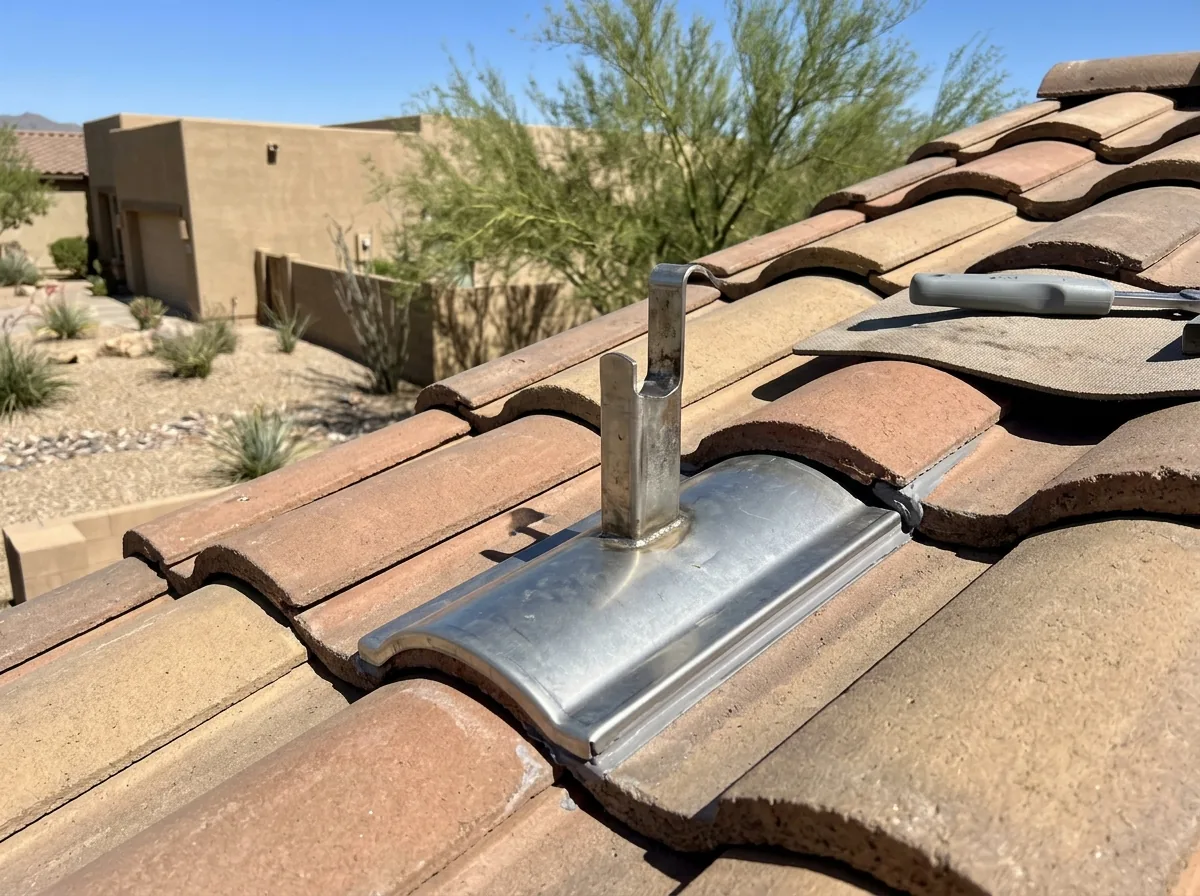
Every mount through a tile roof is a hole in it. The industry manual is plain about the fix: any system that goes through the tile or the deck needs a primary flashing at the tile and a secondary flashing at the deck, and the openings around panels get weather blocking so water stays on top of the tile. The same manual says the roof structure has to carry the solar system's load. Ask for each mount to be re-flashed into the new underlayment rather than set back on its old seal.
Coordinating With the Solar Company and Its Warranty
Two warranties meet on this job, the roof's and the solar system's. Fixr warns that uncertified removal can void panel warranties and insurance coverage, and the tile manual tells installers to check local licensing rules for solar work. Unirac adds that pest damage under panels is generally not covered by homeowner's insurance or the manufacturer's warranty. Put three things in writing before anyone climbs up:
- who disconnects and reconnects the electrical side;
- who seals the mounts into the new underlayment;
- whose warranty answers if a mount leaks next monsoon.
Critter Guards After the Reset
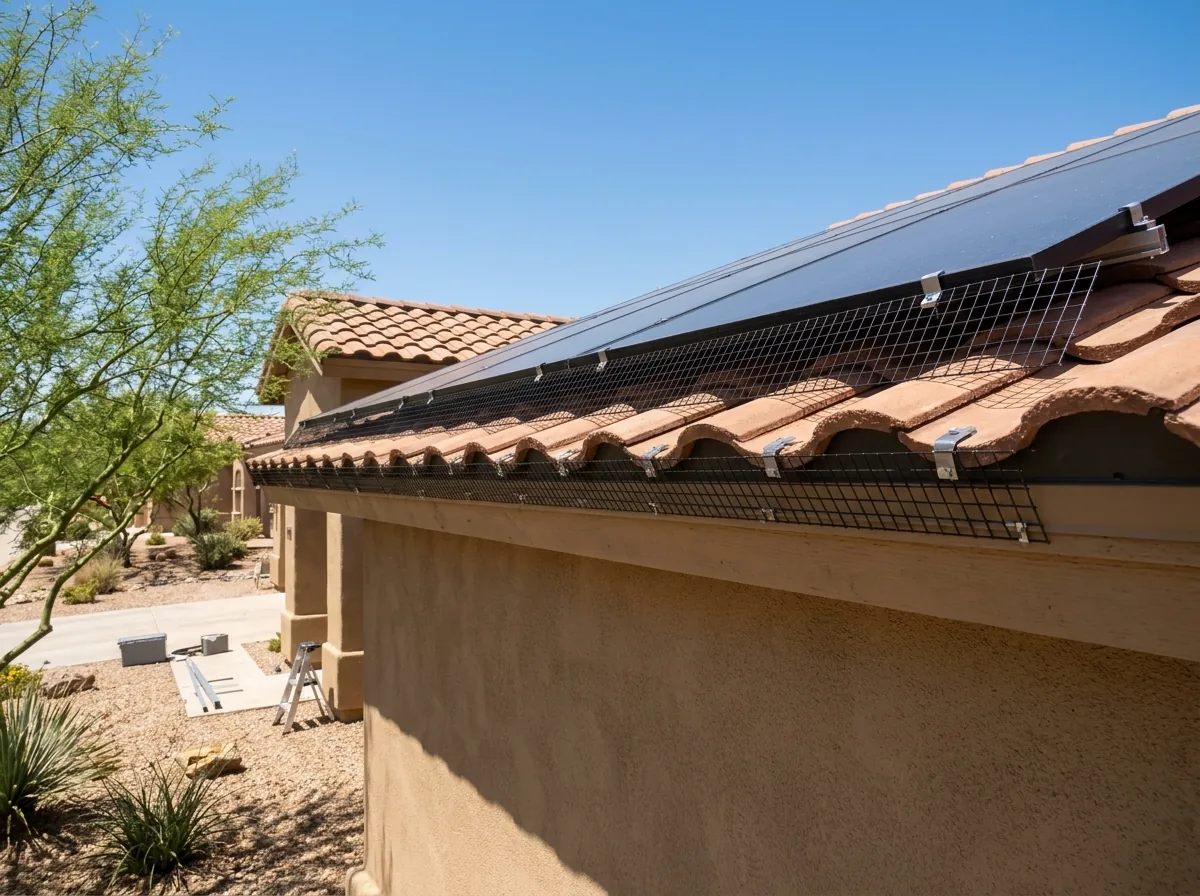
The shade under a panel is a good roost. Unirac says pigeons nest there, rodents chew wire insulation, and the nest debris blocks airflow under the modules. A critter guard is a barrier of wire mesh or plastic around the edge of the array, and it goes on easiest while the panels are off:
- Adhesive-backed guards: quick, but Unirac says they can't be reused when the system is serviced.
- Clip-on guards: reusable, more labor, and they can loosen over time.
Clear old nests before the array goes back. For when a nest can legally be removed, see tile roof bird stop.
Why Gilbert homeowners and HOAs call Tile Roofing Gilbert
- One request goes to one roofer, never to a call list
- Free to send, with nothing to sign until you have a written price
- Ask to see the R-42 or CR-42 license number on the contract
- Ask how many replacement tiles the price allows for
- You pay nothing for the introduction
How a Detach-and-Reset Fits Around a Tile Re-Roof
The order matters more than the speed. A typical sequence, with Fixr's national time estimates:
- STEP01
Disconnect and remove (1 to 2 days)
The solar crew shuts the system down, takes off panels and rails, and stores them. - STEP02
Roof work
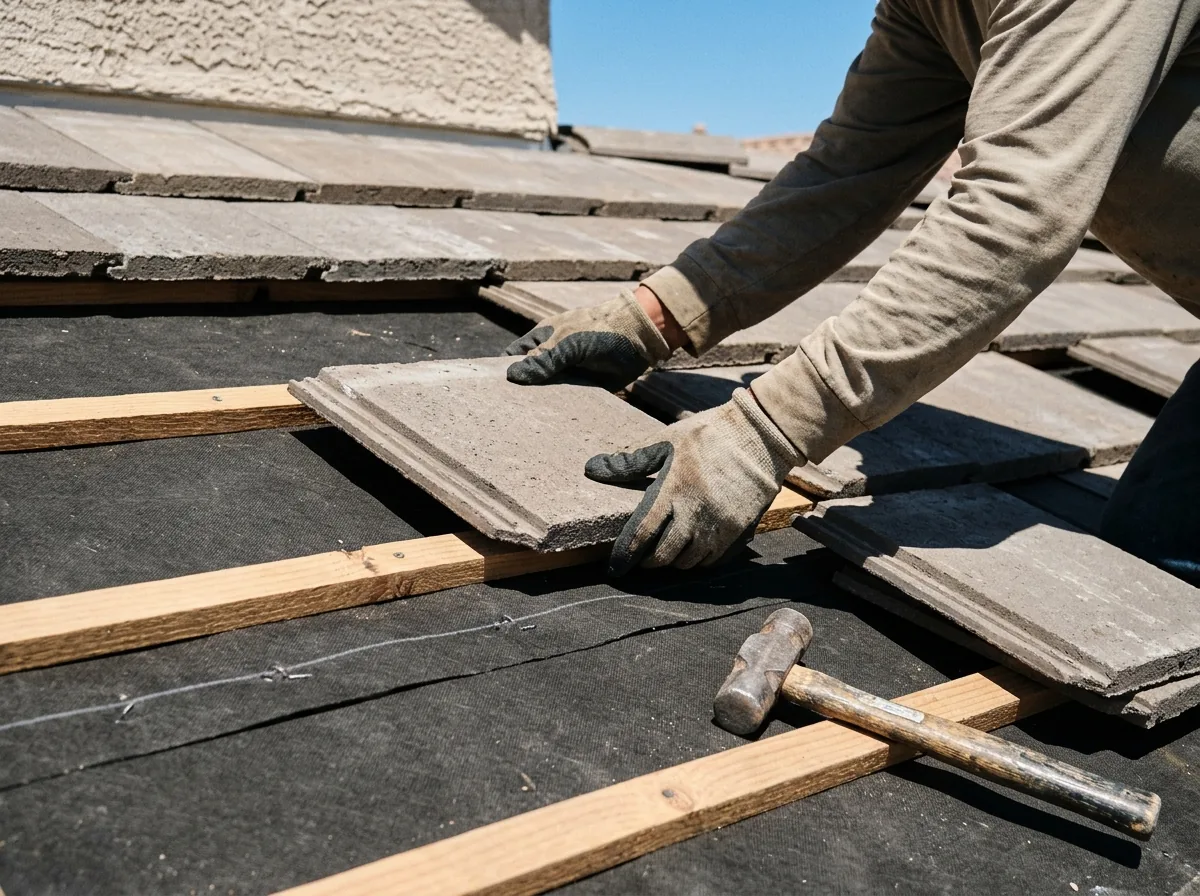
The roofer lifts the tile, replaces the underlayment and any cracked pieces, and leaves the mount locations marked. - STEP03
Mounts and flashing
Mounts go back with tile and deck flashing tied into the new underlayment. - STEP04
Reinstall and inspect (2 to 3 days)
Panels go back up, the system is reconnected and checked.
Monsoon season is a poor window to leave a roof open, so book the solar crew's two visits before the roofer's start date, not after. Ask for one written schedule with both companies' days on it.
Frequently asked questions
Our panels are only six years old but the felt under them is shot. Do they really have to come down?
Yes, for a re-lay or replacement on that slope. The underlayment sits under the tile, and the tile sits under the panels, so nothing gets reached without taking the array off. Fixr's national range for removing and reinstalling 14 to 16 panels is $2,800 to $4,800, not counting the roof itself.
Who should take the panels off, the roofer or the solar company?
Fixr says the company replacing the roof usually isn't the one removing the panels, and that work by uncertified crews can put panel warranties and insurance coverage at risk. Ask your solar company first. If it no longer services the area, ask the roofer who it works with, and get the split of tasks in writing.
Where do the panels go while the roof is open?
If they can't stay on the property, Fixr puts the average cost of shipment and off-site storage at about $250. A garage floor or a shaded side yard works; a driveway in July is a poor place for stacked glass.
Pigeons nest under our array every spring. Can that be fixed during the reset?
Ask about it while the panels are off. A critter guard is wire mesh or plastic fitted around the edge of the array. Unirac points out that adhesive-backed guards can't be reused when the system is serviced, while clip-on types can. Clear the old nest material before the panels go back.
Will reinstalling the panels need a permit?
Fixr says some places require one for the reinstall and that the fee is often built into the removal price. Ask the solar company to confirm with the Town before the work starts, and ask who books any inspection. Gilbert Development Services takes permit questions at (480) 503-6700.