
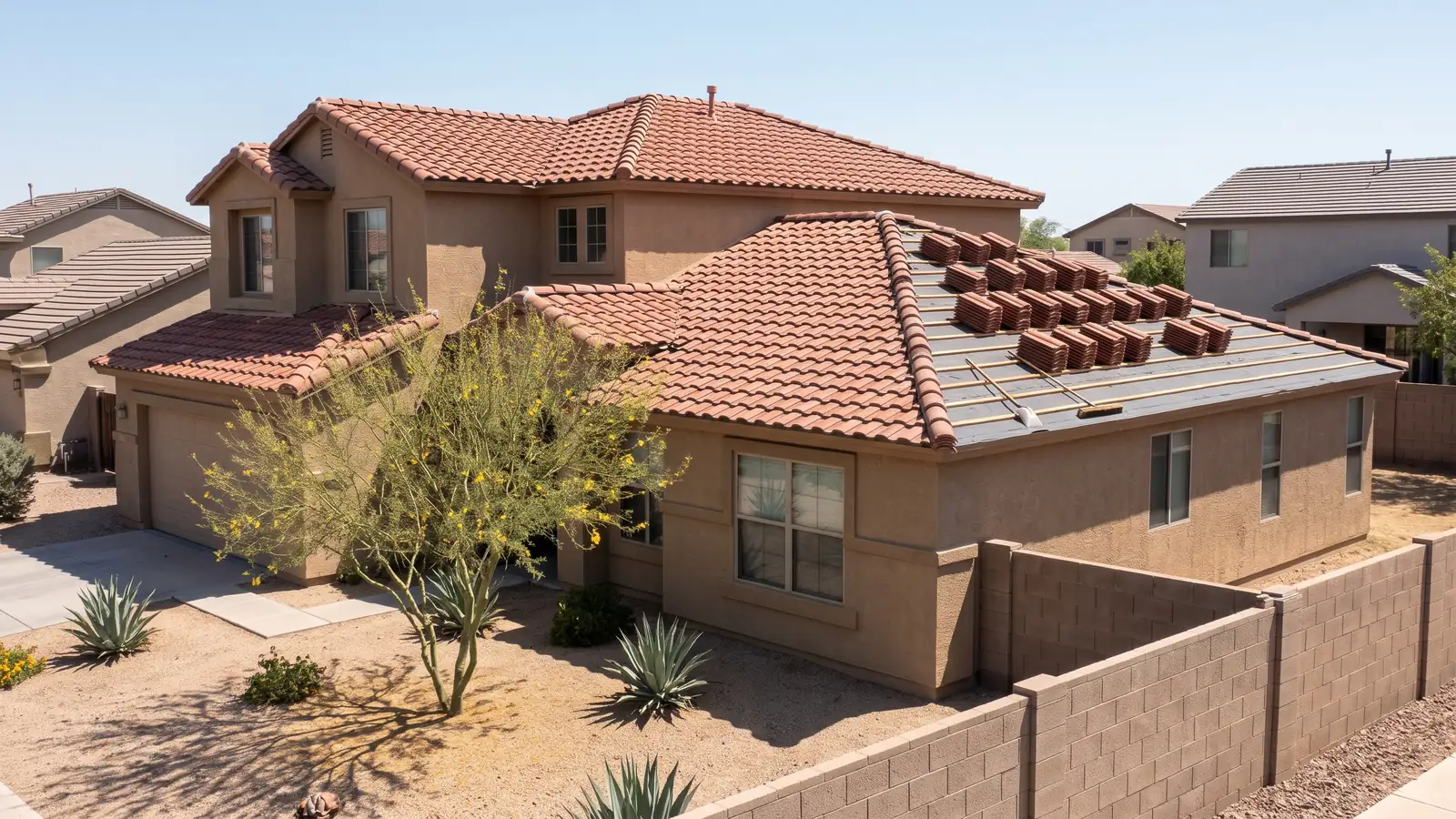
Tile roofing in Gilbert, AZ
Tile Roof Ridge Cap Repair in Gilbert, AZ
- Cost yardstick: Angi's national ridge cap repair figures run $200 to $750 a job, or $6 to $10 per linear foot. They cover ridge caps in general, not tile, so use them as rough background only.
- Fastening zone: the code counts three tile courses, and at least 36 inches, on each side of hips and ridges as a perimeter fastening area.
- Bond between caps: the TRI Alliance Concrete and Clay Roof Tile Installation Manual (2024 edition) requires code-approved adhesive between the laps of hip and ridge trim, covering each nail hole.
- Mortar or dry-set: with mortar, the ridge nailer has to be wrapped first; a dry-set ridge uses approved weather blocking or vent material instead.
Tile Roofing Gilbert lines you up with one local roofer for loose caps, cracked mortar or a hip that's lost pieces. Note roughly how many feet look affected, whether the ridge is mortared or dry-set if you know, the roof's age, and whether a storm came through.
Tile Roof Ridge Cap Repair by Method
The caps along the top of the roof and down each hip cover the cut edges of the field tile. They're held by a wood nailer underneath and by whatever fills the gap beside it, mortar or a dry system. The repair follows how the ridge was built.
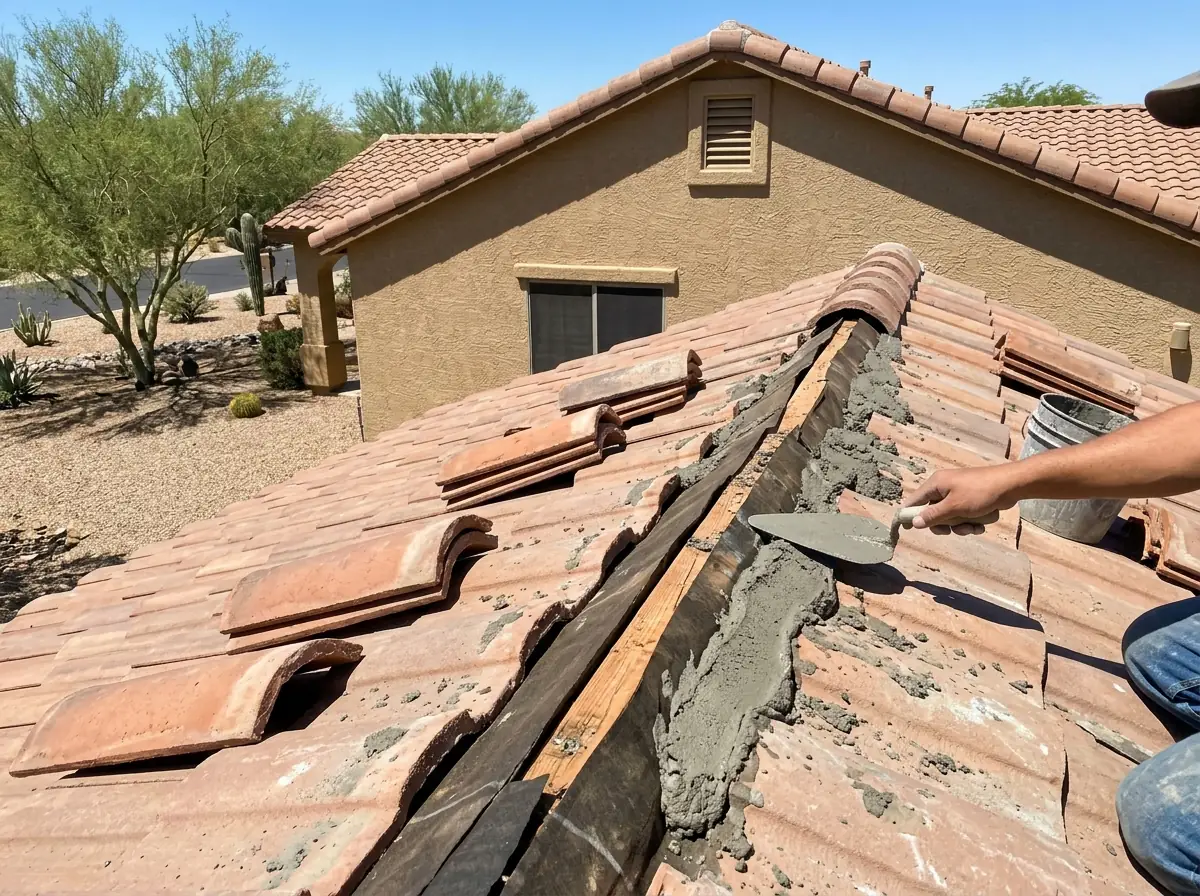
Mortar-Set Ridge Re-Bed
On a mortared ridge, mortar fills the space between the field tile and the caps and keeps water on the surface. The manual's detail for this:
- Nailer: securely fastened, tall enough to keep the caps in an even line, and wrapped when mortar is used.
- Caps: fastened to the nailer, with code-approved adhesive over the mechanical attachment.
- Laps: adhesive between each cap and the next, over the nail hole.
A re-bed means lifting the loose caps, cleaning off the old mortar, checking the nailer, then resetting and fastening. Ask whether the nailer is sound before new mortar goes on it.
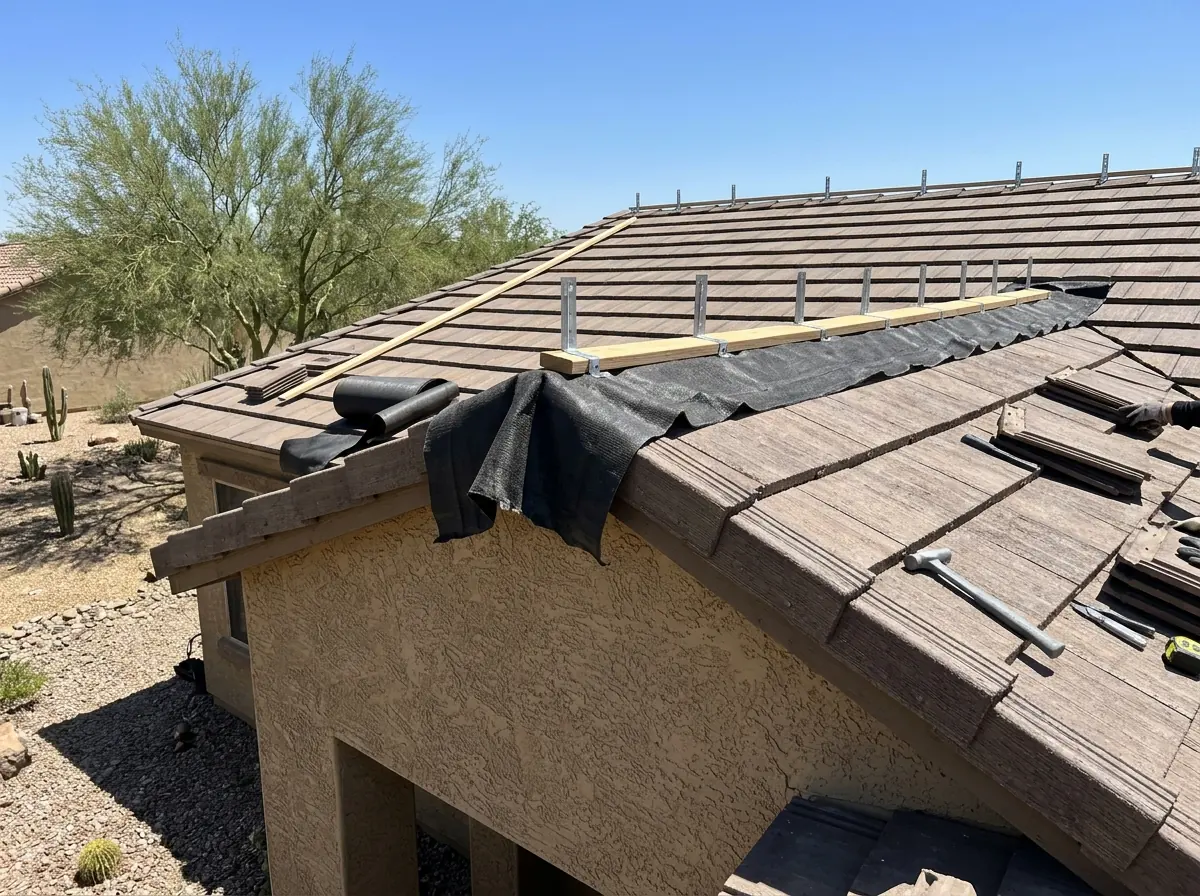
Dry-Set Ridge With Vent Material
A dry ridge replaces mortar with a roll-out weather-blocking or ventilation material. In the manual's vented version:
- heavy galvanized steel riser brackets hold the nailer, fastened per the bracket maker;
- a continuous 1-inch slot in the sheathing lets attic air out;
- the vent material and ridge tile must fully cover the top of the field tile.
Angi lists vented ridge cap replacement at $10 to $14 per linear foot, again a general figure that isn't tile-specific. How much ridge venting an attic needs is a separate question, answered on tile roof ventilation.
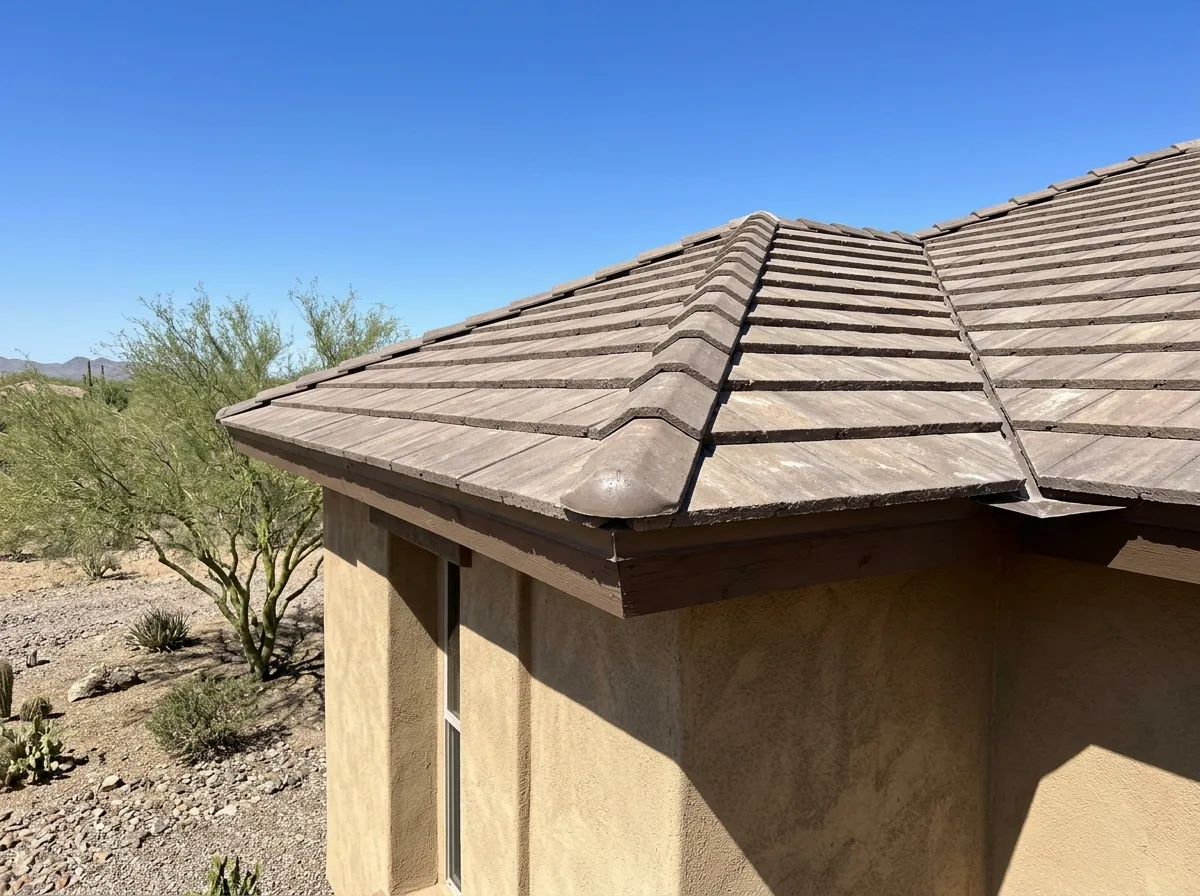
Hip Caps
Hips run down the slope instead of across it, and the manual gives them their own detail:
- Hip starter: a closed piece at the corner where two eaves meet, starting the run.
- Hip nailer: held back from the eave edge.
- Sealing: UV-resistant material, mortar, roof cement or self-adhering flashing where the tile meets the hip board.
- Headlap: roofer's cement or tile adhesive over each nail hole.
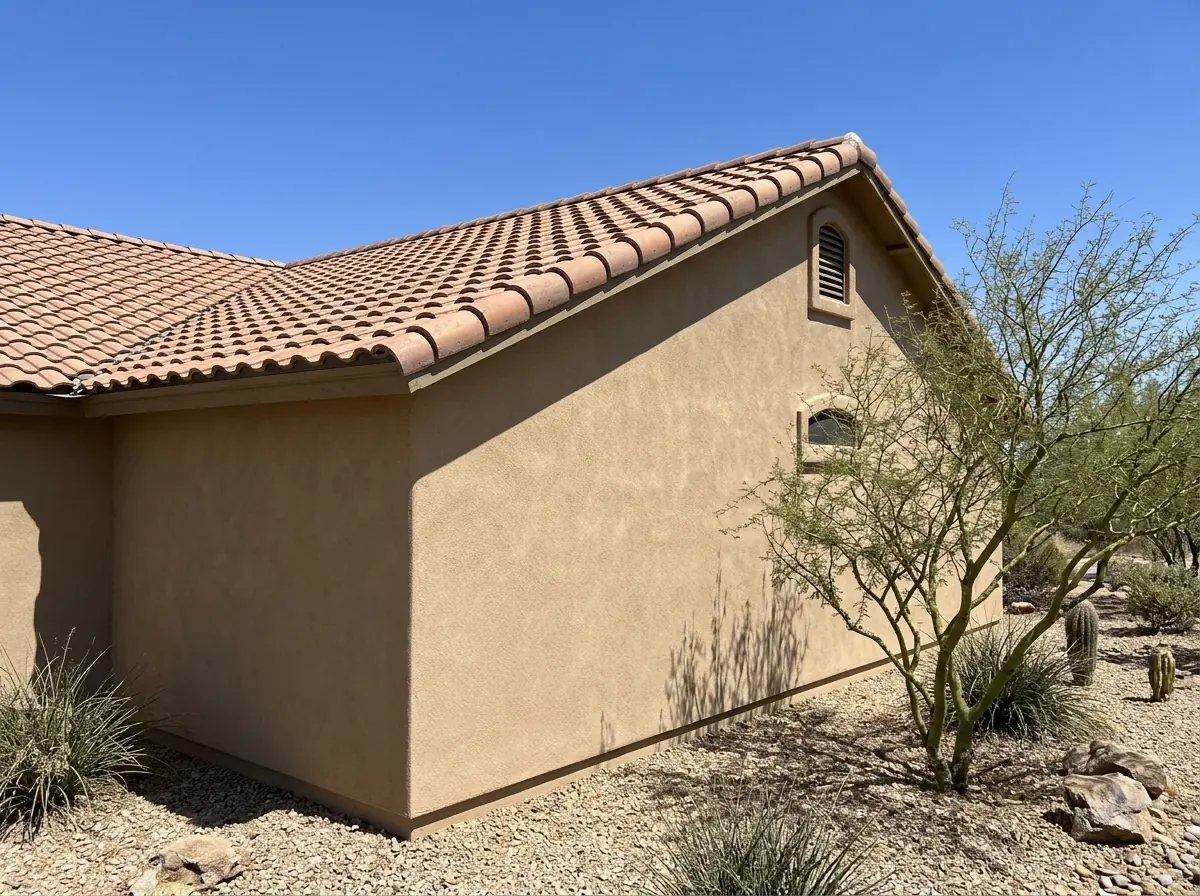
Rake and Gable Caps
Rake tiles trim the sloped edge of a gable. The manual sets them with two corrosion-resistant fasteners each into a fascia or barge board of at least nominal 2-inch lumber, with 3/4 inch of penetration and heads bigger than the nail hole. The thick end goes upslope, and in windy areas the manual recommends a 1-inch dab of adhesive under each overlap. Rake metal under those tiles is covered on valley and flashing repair; a soft fascia is a decking and fascia job.
Why Gilbert homeowners and HOAs call Tile Roofing Gilbert
- One request goes to one roofer, never to a call list
- Free to send, with nothing to sign until you have a written price
- Ask to see the R-42 or CR-42 license number on the contract
- Ask how many replacement tiles the price allows for
- You pay nothing for the introduction
Spotting Ridge Cap Problems and What to Ask
Ridges and hips sit at the top of the code's perimeter zone, the band where every tile needs at least one fastener. For Gilbert's design wind speed and the monsoon microburst winds, see tile roof storm damage repair.
From the ground, look for gaps along the ridge line, caps out of line, or chunks of mortar in the gravel. Stay off the roof yourself; walking tile breaks it, and the right place to step is covered on broken roof tile repair. When the roofer comes out, ask:
- STEP01
Mortar or dry-set?
And if mortared, whether switching to a dry system makes sense on this roof. - STEP02
How's the nailer?
A cap set on a rotted board won't hold, however good the mortar. - STEP03
Is adhesive going between the laps?
The manual requires it. - STEP04
How many feet, and which ridges?
Get the length in writing, since cost guides price ridge work by the foot.
If the field tile below the ridge is slipping too, or the felt under it is brittle, the caps are a symptom. That's a conversation about underlayment replacement.