
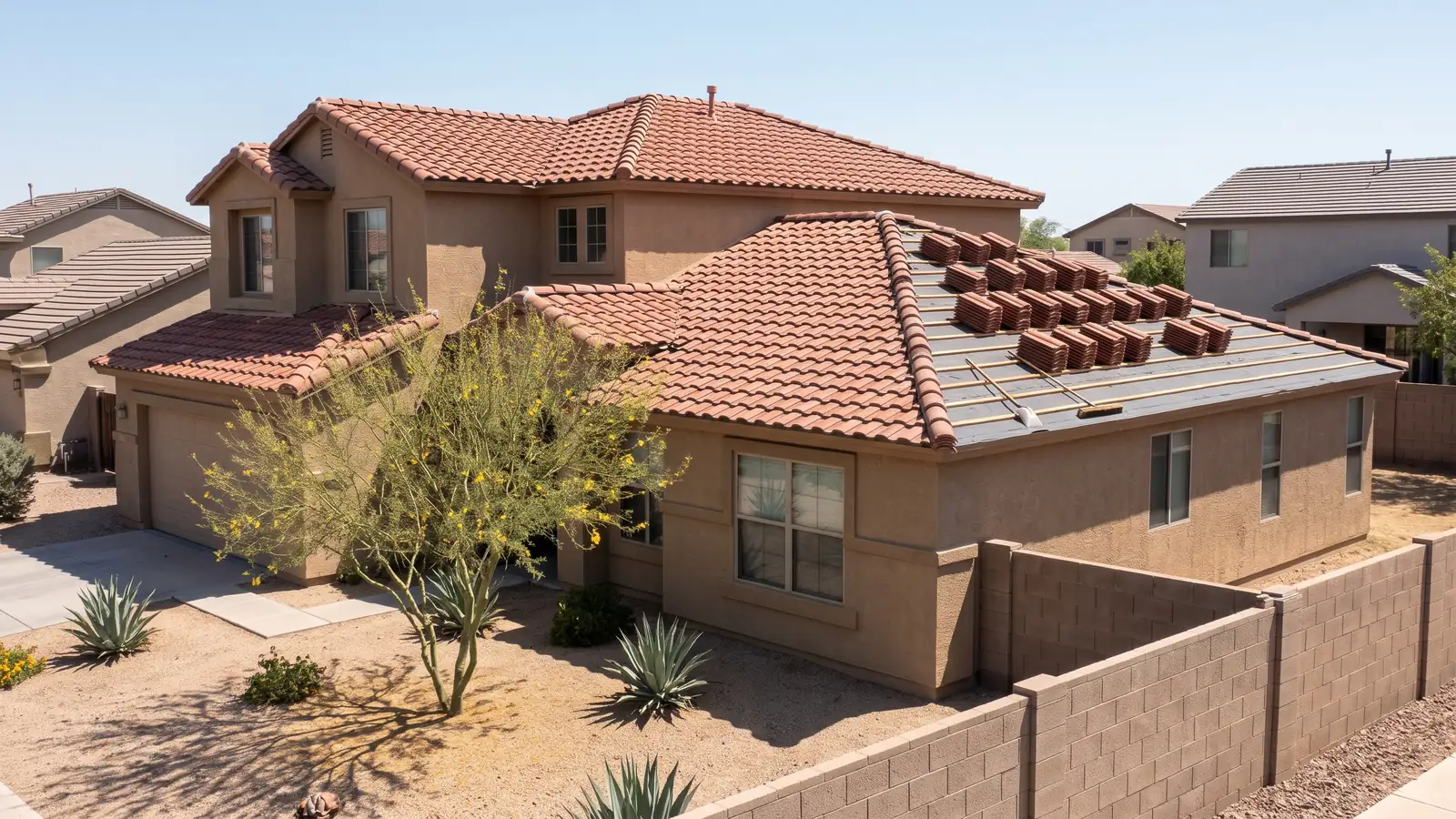
Tile roofing in Gilbert, AZ
Shingle to Tile Roof Conversion in Gilbert, AZ
- Weight: common concrete tile weighs more than twice as much as asphalt shingles, so the framing has to be checked first.
- Engineering: structural engineers charge $100 to $220 an hour to judge whether a roof can carry tile; reinforcing one runs $1,000 to $10,000.
- Code: under the 2018 IRC that Gilbert enforces, the roof structure must carry the new covering plus the material and equipment loads during installation.
- Price gap: nationally a tile roof costs $10,500 to $62,500 installed, against $5,700 to $12,000 for asphalt shingles.
Tile Roofing Gilbert makes the introduction to one local roofer for the shingle or shake roof you want in tile. Treat the dollar figures as national context; the engineer's report and the roofer's measurements are what price your house. When you call, say what the roof is now (asphalt, wood shake or foam), the house's age, whether you have the original plans or truss drawings, and whether your HOA allows tile.
Shingle to Tile Roof Conversion by Starting Roof
Every conversion has the same three questions: can the framing carry it, does the slope allow it, and what comes off first. The starting roof changes the answers.
Asphalt Shingle to Concrete Tile
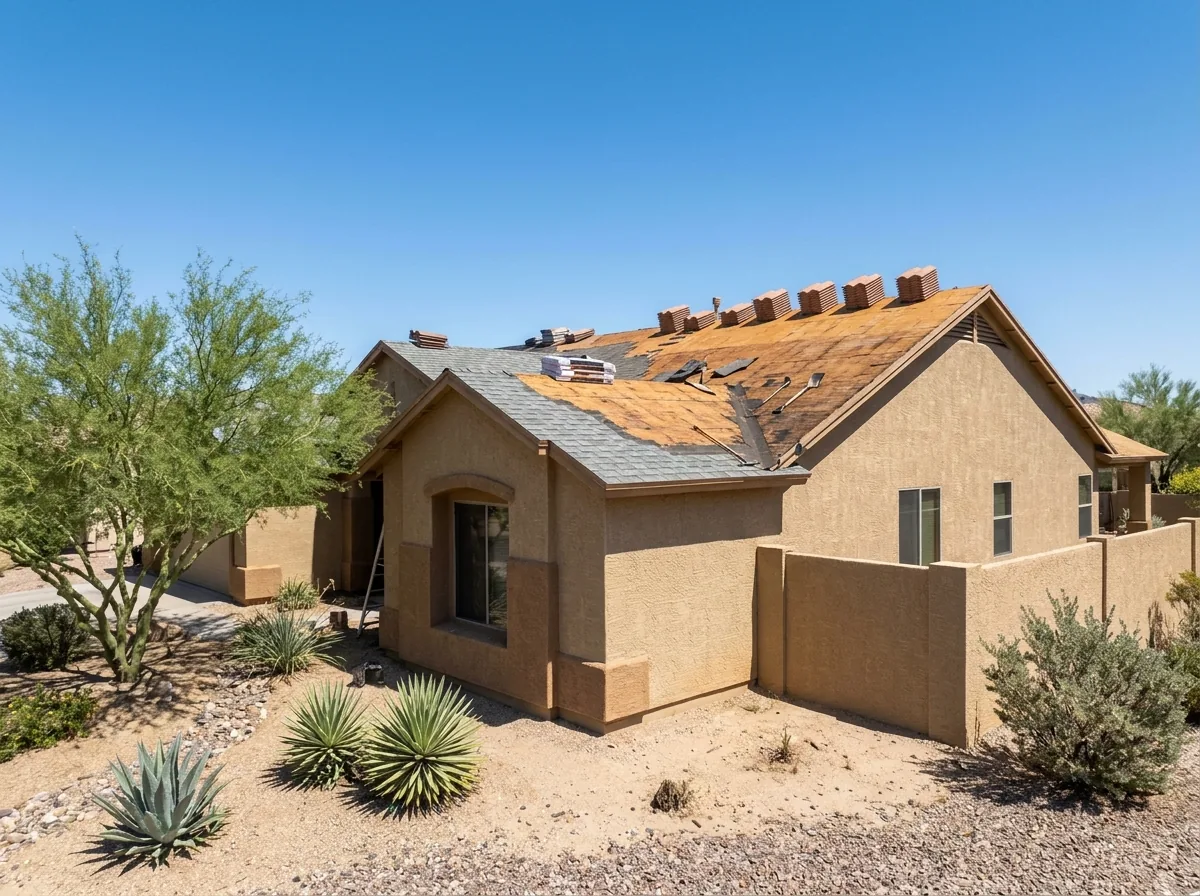
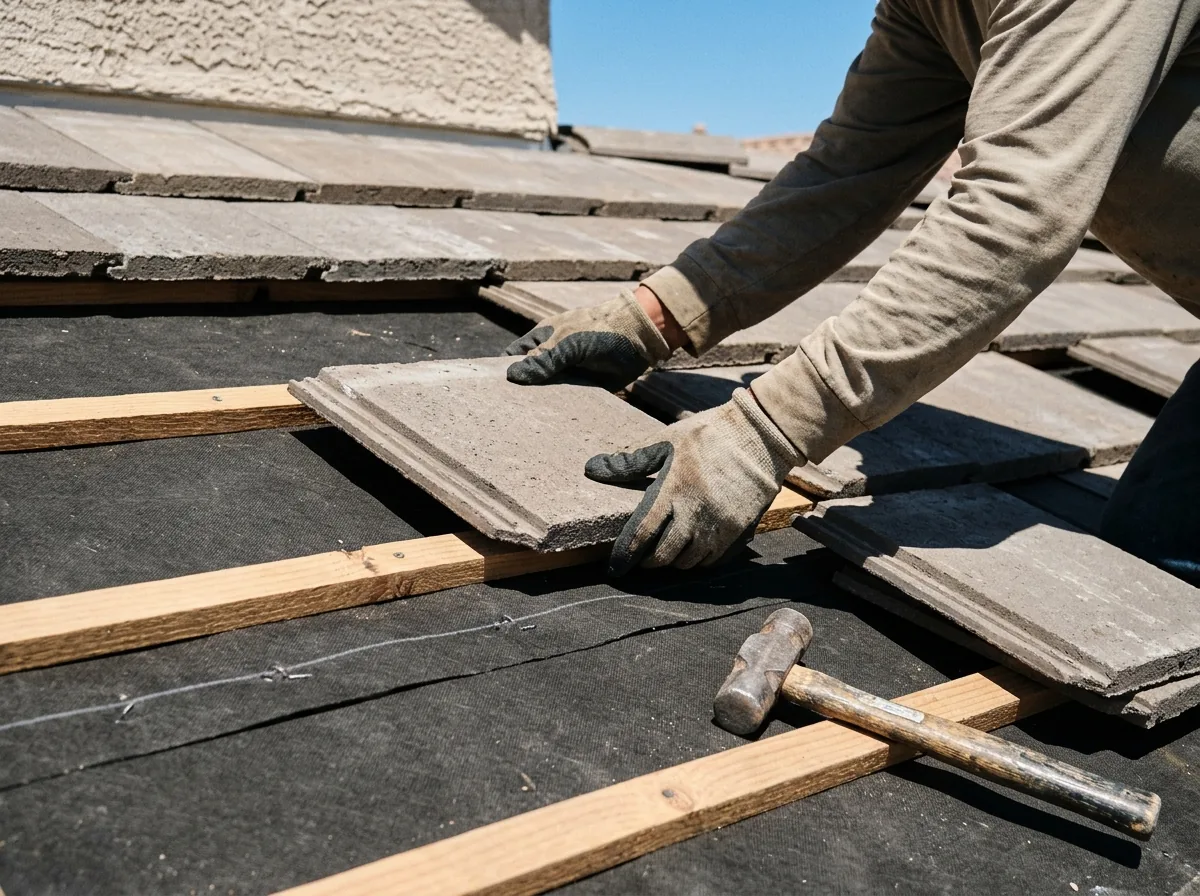
This is the common conversion. HomeGuide puts the most common concrete tile at more than double the weight of asphalt shingles and says installing tile over shingles adds weight and shortens the tile roof's life. So the shingles come off, the deck gets checked, and new underlayment and battens go down before any tile. Removal adds $1 to $3+ per sq ft, and the code's tear-off rules are on the replacement page.
- Engineer's review: $100 to $220 per hour
- Reinforcement, if needed: $1,000 to $10,000
- Replacing roof trusses, where it comes to that: $5 to $14 per sq ft
Wood Shake to Tile
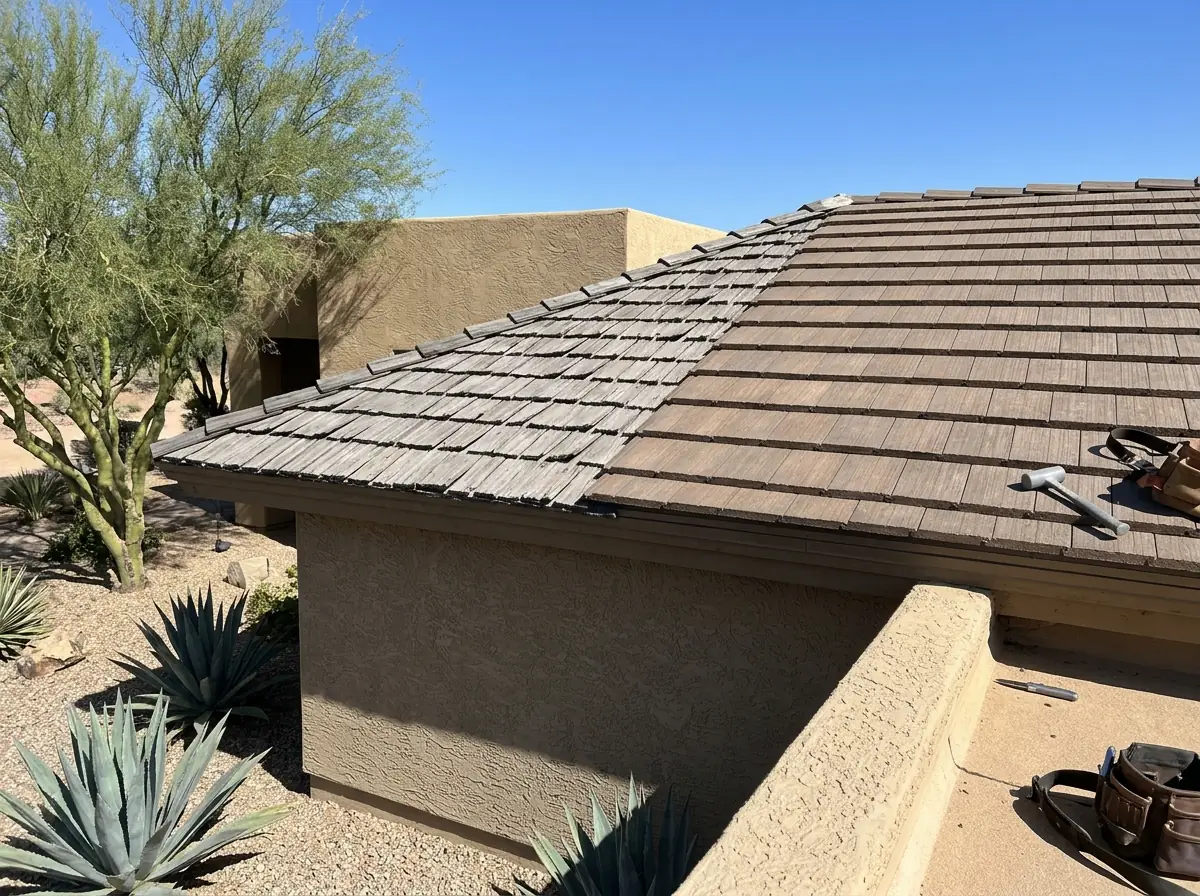
If your house has a shake roof, the weight check is the same as for asphalt. The code allows tile on solid sheathing or spaced structural boards, so sound boards may stay (decking replacement page), and shake-look concrete tile keeps the wood look (flat tile roofing page).
Lightweight Tile on Framing That Can't Carry Standard Tile
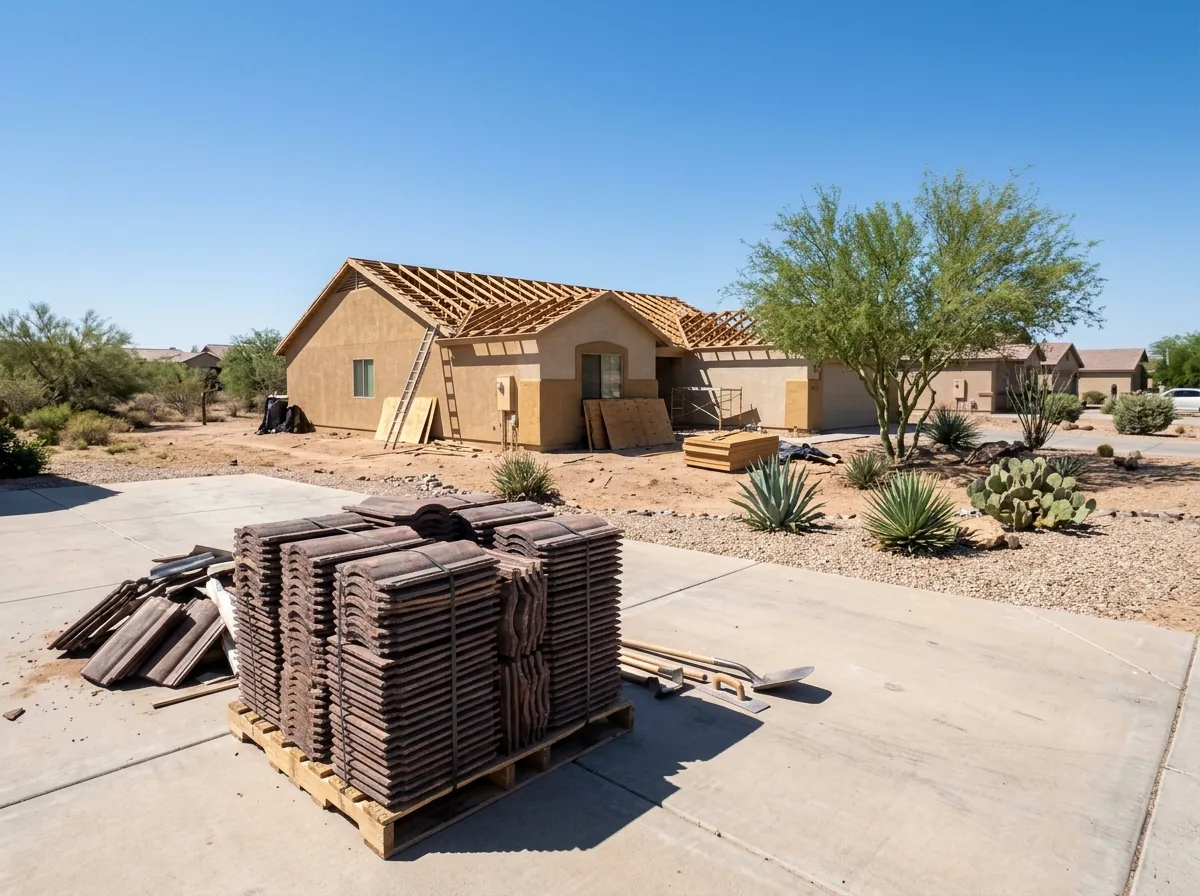
When the engineer says the framing is marginal, lightweight concrete tile is the usual middle path. TRI's manual defines standard-weight roof tile as 9 lb per sq ft installed or more; lightweight products come in under that. HomeGuide notes they cost more and break more easily. The weights side by side are on the concrete tile roofing page. Ask the engineer to size the job for the exact tile you plan to buy, not "tile" in general.
Foam and Low-Slope Sections That Stay Off Tile
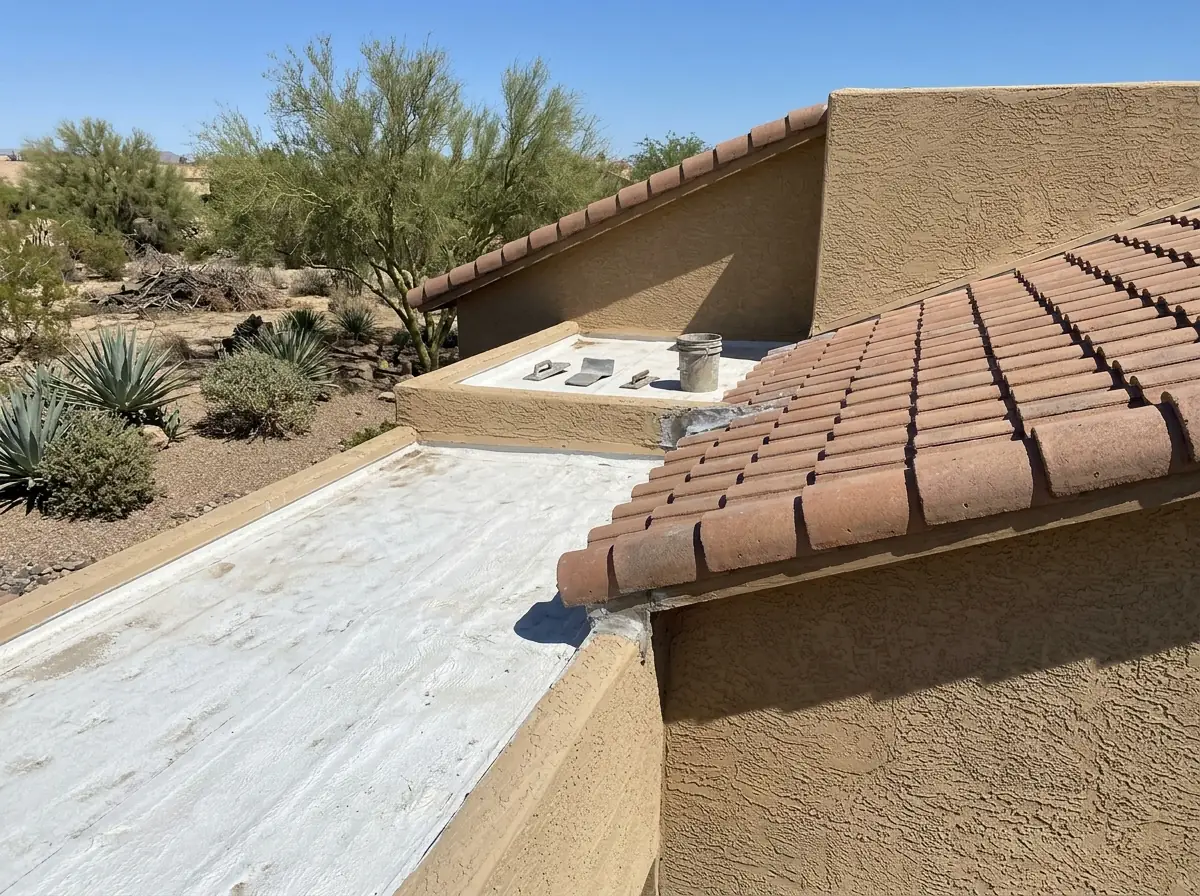
Where a house pairs a pitched roof with a flat foam section over a patio or family room, the flat part is the limit. Tile has a minimum slope (the rules are on the underlayment replacement page), and HomeGuide says most flat roofs can't be tiled because they lack the slope to drain. So the flat part stays foam or another low-slope roof. Rosie on the House says foam's elastomeric top coat protects it from UV and can help it last 25-plus years if it's recoated every five to 10 years.
Why Gilbert homeowners and HOAs call Tile Roofing Gilbert
- One request goes to one roofer, never to a call list
- Free to send, with nothing to sign until you have a written price
- Ask to see the R-42 or CR-42 license number on the contract
- Ask how many replacement tiles the price allows for
- You pay nothing for the introduction
How a Conversion Gets Approved and Built
The rule that governs this job is IRC R908.2: the structural roof components must be able to support the roof covering system and the material and equipment loads during installation. "During installation" matters, because tile is stacked on the roof before it's laid.
- STEP01
Engineer's review
Bring any original plans or truss drawings. Ask for a written answer naming the tile weight it was checked against. - STEP02
Permit check
Gilbert exempts "re-roofing not requiring a structural change" from permits. Whether your conversion fits that phrase is a question for Gilbert Development Services at (480) 503-6700; the details are on the replacement page. - STEP03
HOA approval
Switching to tile changes the look of the house. The approval process is on the HOA tile roofing page. - STEP04
Tear-off and reinforcement
Shingles come off; any framing work happens with the deck open. - STEP05
Dry-in, battens and tile
Underlayment, flashing and battens go on, then the tile is loaded evenly and laid.
One tip: get the engineer's report before collecting roofing bids. A bid without it is guessing at the one line that can swing by thousands of dollars.
Frequently asked questions
Our house has shingles but the neighbors all have tile. Can we just switch?
Often, but not by ordering tile. The framing was sized for shingles, and the 2018 IRC says the roof structure has to carry the covering you put on it. Start with an engineer's look at the rafters or trusses. HomeGuide puts engineers at $100 to $220 an hour and reinforcement, if needed, at $1,000 to $10,000.
Can tile go right over the old shingles to save the tear-off?
Plan on a tear-off. HomeGuide notes that tile laid over asphalt shingles adds weight and shortens the tile roof's life, and the roofer will want to see the deck anyway. Gilbert's re-roof exemption also doesn't cover a job with structural changes, so a conversion that needs reinforcement goes through a permit.
The engineer says our framing is borderline. Is there a lighter option?
Lightweight concrete tile is made for that case. It still looks like tile but cuts the load a good deal; the per-square numbers are on the concrete tile page, and its trade-offs are in the lightweight tile section of this page.
Half our roof is flat foam over the family room. Does that part become tile too?
Usually not. Tile needs at least a 2.5:12 slope, so a flat foam section stays foam unless it's reframed with real pitch. If the foam is due for a recoat, it can be timed with the tile work.
Will a tile conversion pay for itself in Arizona?
Not on price alone. Nationally, tile costs roughly double or more what asphalt does installed. What you buy is service life: HomeGuide gives concrete tile 30 to 50+ years and clay 50 to 100+. The layer under the tile wears out sooner, though: HomeGuide gives underlayment 20 to 30 years and Rosie on the House says it generally lasts eight to 20, so plan on underlayment work long before the tile itself is done.