
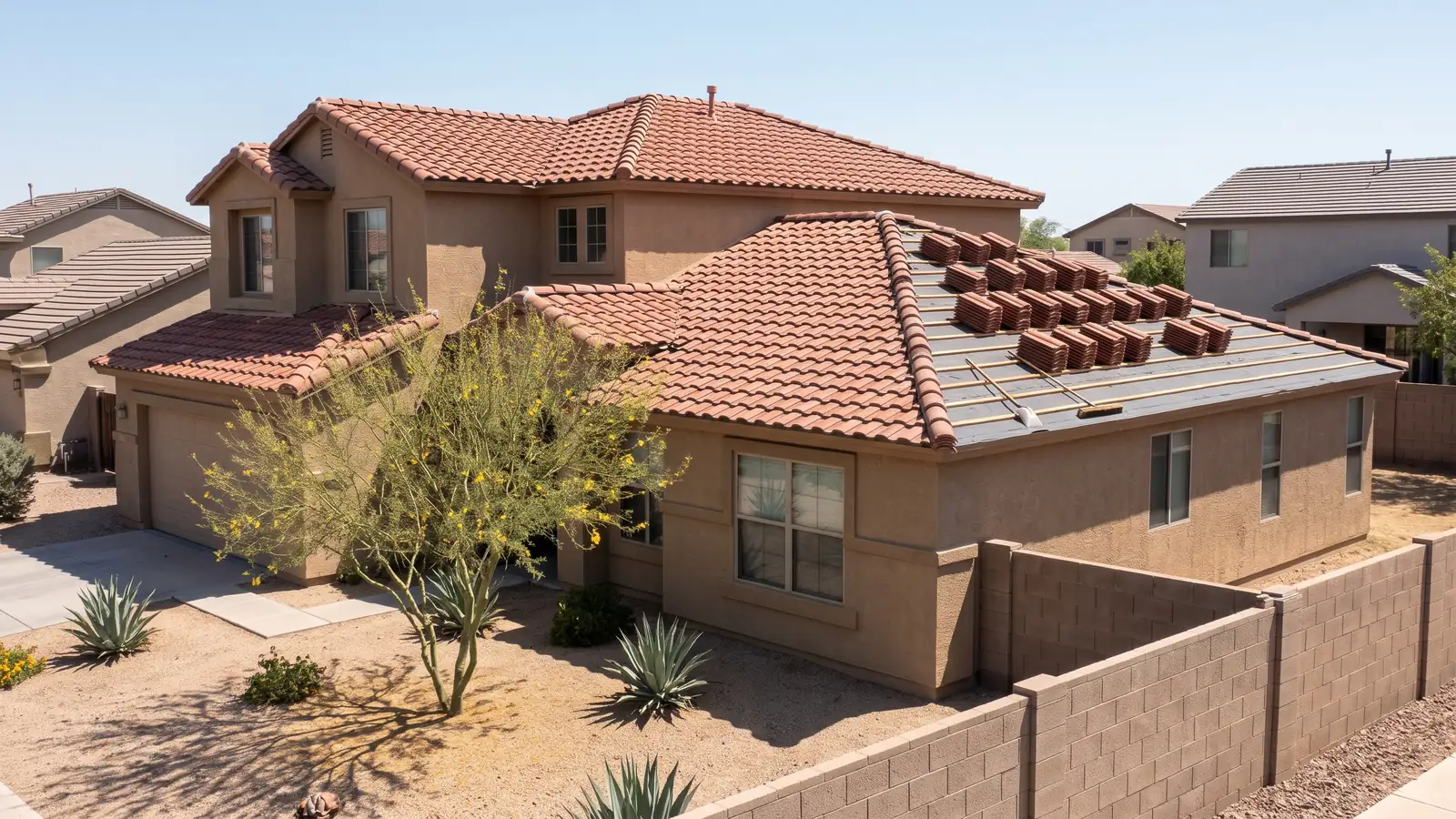
Tile roofing in Gilbert, AZ
Tile Roof Leak Repair in Gilbert, AZ
- Typical leak repair: $200 to $900 in national cost-guide figures, before any underlayment work.
- Common causes, per HomeGuide: broken or slipped tile that leaves the felt exposed, and debris in valleys that backs water up under the tile.
- Overlap rule: field tile should lap the course below by at least 3 inches; stretched courses let rain in.
- The real water barrier: the underlayment and flashing, not the tile, per Building Advisor.
A drip, a ceiling stain or wet drywall is enough to start with. Tile Roofing Gilbert gets your call in front of one roofer near you, independent of this site. The repair price above is a national figure, useful for judging an estimate and nothing more. If the stain only appears in hard rain, that's worth saying.
Tile Roof Leak Sources
Tile sheds most of the rain, but the felt and metal underneath are what keep it out of the house. A leak means water got past both layers somewhere. These are the places a roofer checks first.
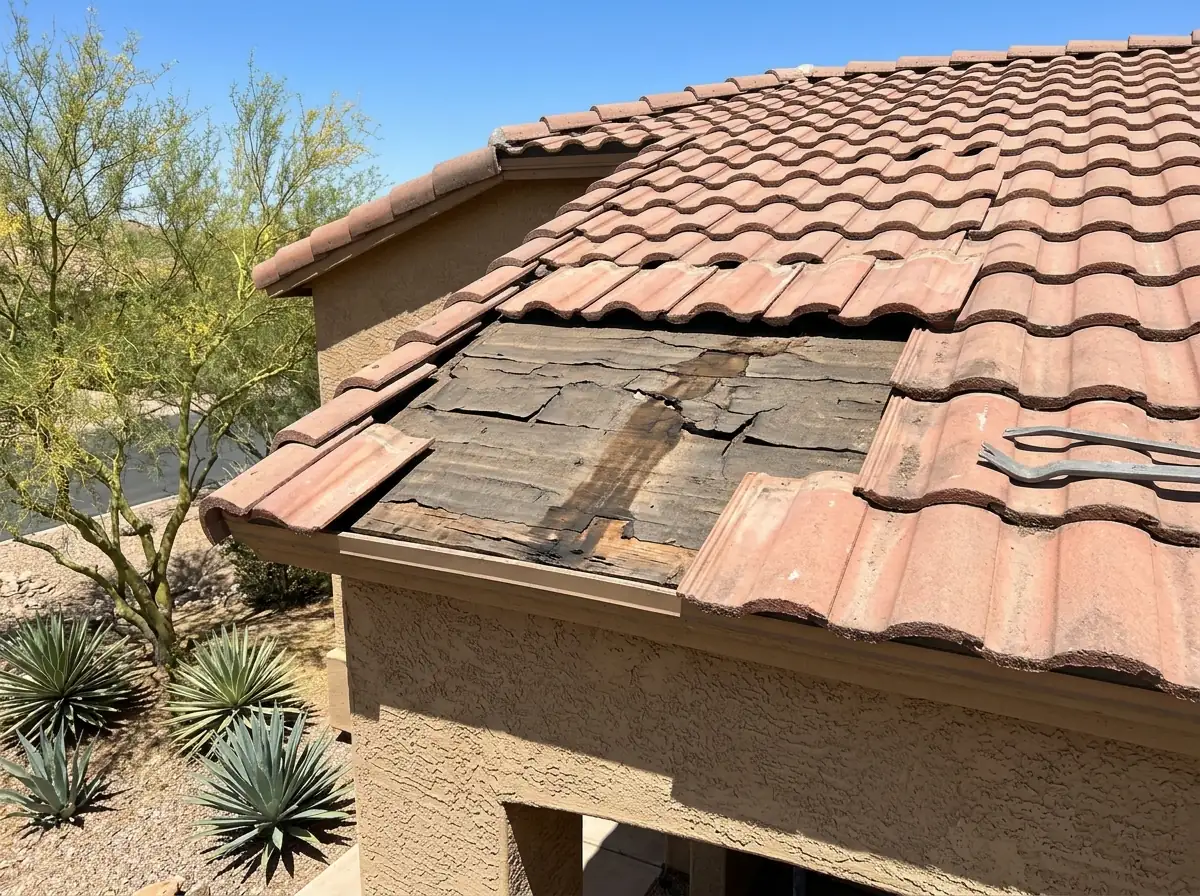
Worn Underlayment Under Intact Tile
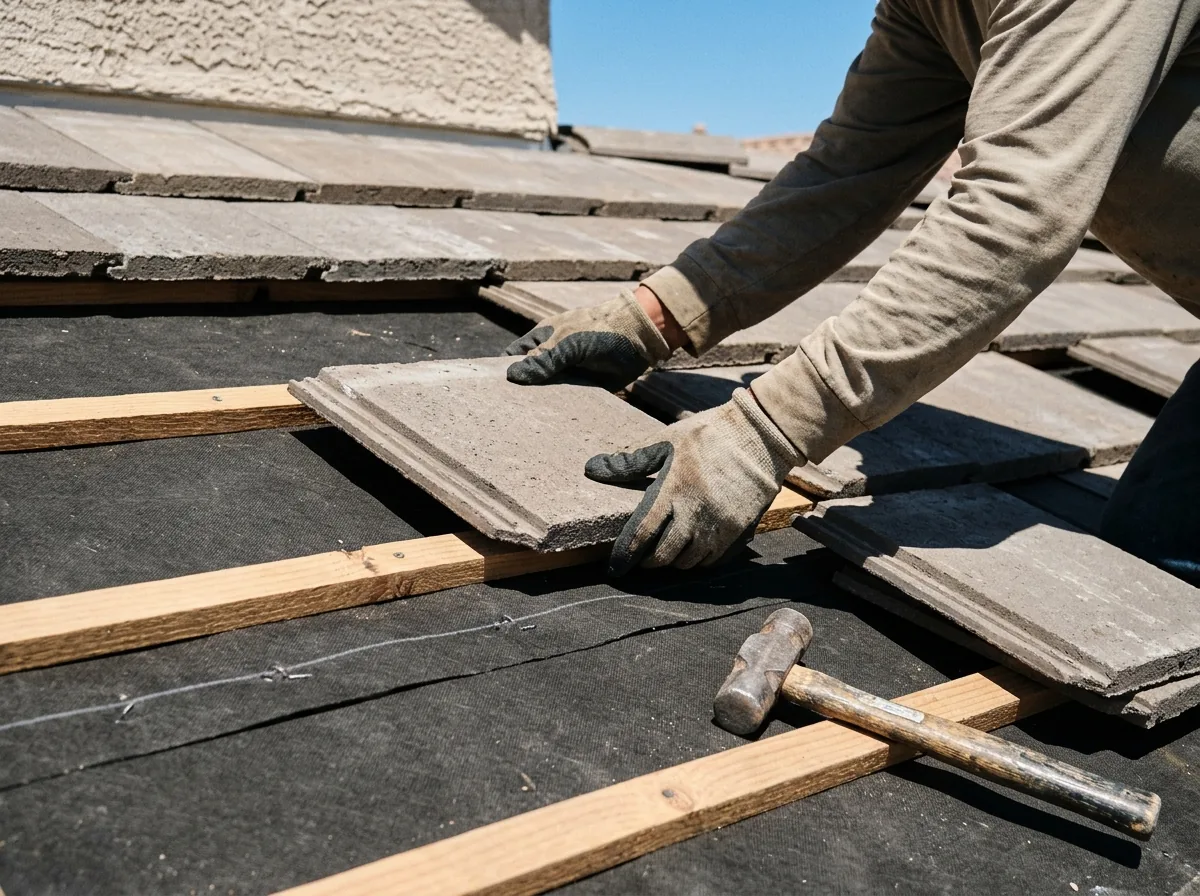
The most frustrating leak is the one where every tile looks fine. Old felt dries out, splits at the laps and tears around nails, and water that slips under the tile then runs straight to the deck. One leak like this is a patch; leaks in several places usually mean the whole layer is done. Lifespans and the re-lay options are on the underlayment replacement page.
Debris-Dammed Valleys
HomeGuide names debris building up in valleys as a common cause of tile leaks, because it backs water up under the tile. Clearing it is cheap; fixing felt that's been soaked for years isn't. If a valley sits under a tree, or below a second-story roof that drains onto it, mention that when you call.
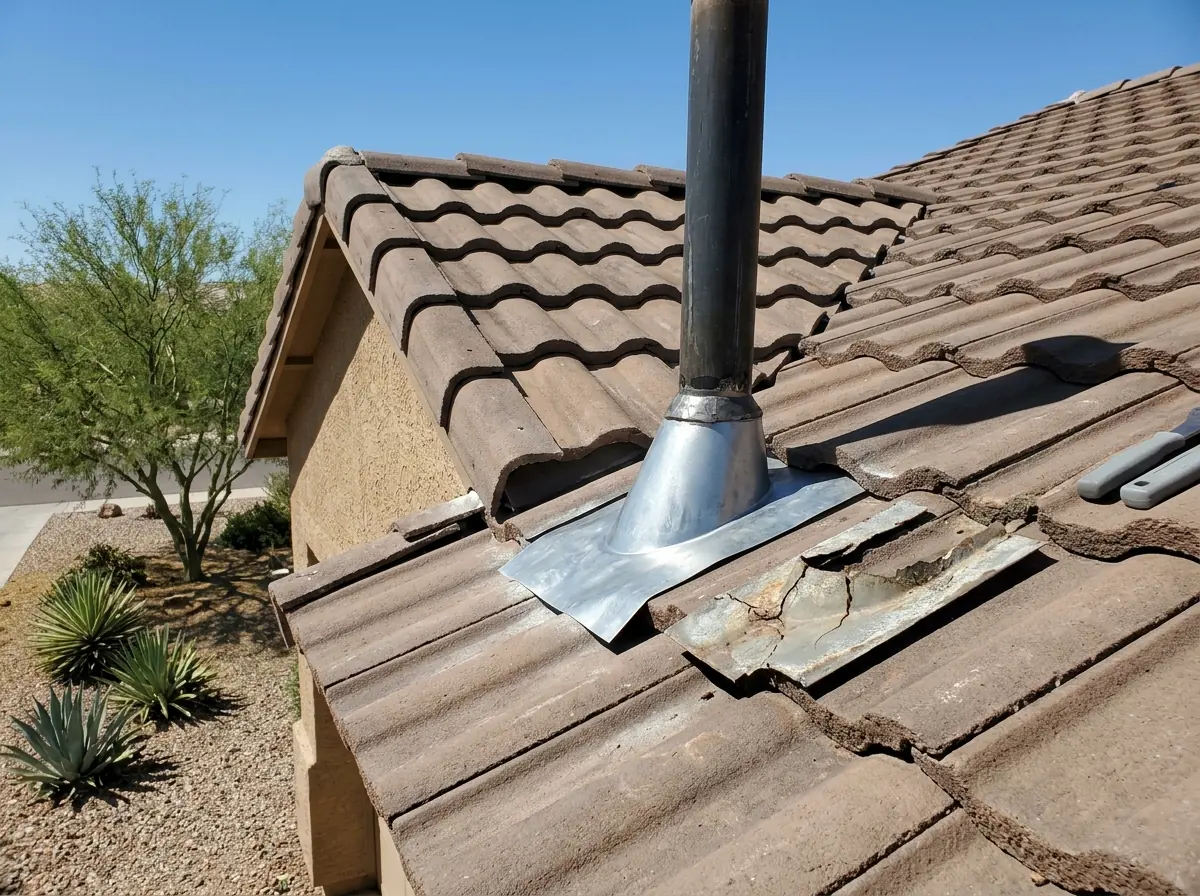
Cracked Pipe Jacks and Vent Flashing
Every pipe through a tile roof needs two layers of protection. The 2024 edition of the tile industry's installation manual requires both a deck flashing and a tile flashing, with the tile flashing on medium and high profile tile in malleable metal: soft lead of at least 2.5 lb per sq ft, dead-soft aluminum or soft copper. The code requires rusted, damaged or deteriorated vents and flashings to be replaced when tile is reinstalled. Flashing prices and the valley metal rules sit on the valley and flashing repair page.
Tiles Stretched Past the 3-Inch Head Lap
Each tile should overlap the one below by at least 3 inches, unless the tile's design doesn't allow it. Rosie on the House describes "stretching," spreading tiles farther apart than that 3-inch overlap, and says the only cure is to re-lay the roof at the standard spacing. Stretching saves tile at install and costs a leak later. Ask the roofer to measure the exposed face of a few tiles: unless the tile's design rules out a 3-inch lap, a face longer than the tile minus 3 inches means the course is stretched.
Broken Tile Exposing the Felt
A single crack is enough. Rosie on the House warns that one cracked tile can let monsoon rain under the tile and into the underlayment, and Eagle says tiles broken by foot traffic should be replaced as soon as possible because they let water and UV reach the underlayment. Swapping a few tiles is covered on the broken roof tile repair page.
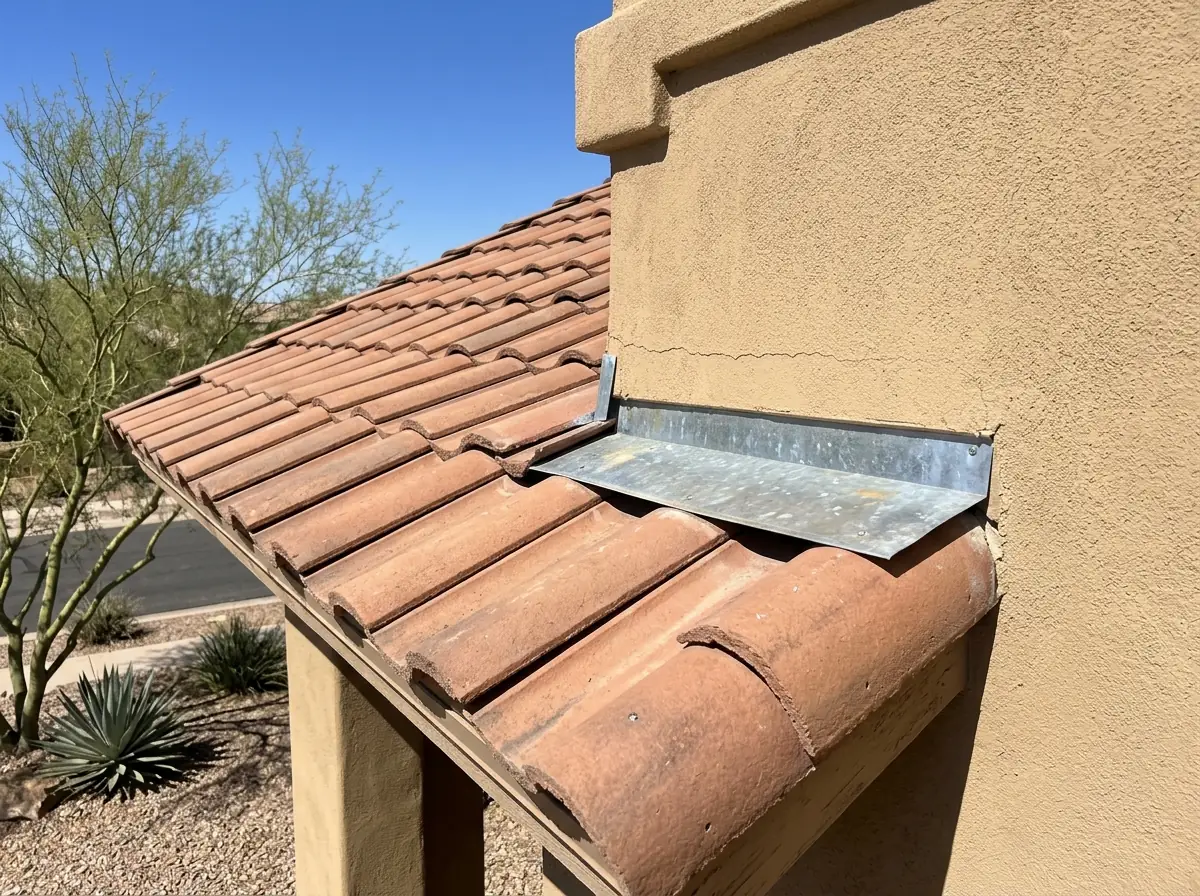
Wall and Headwall Flashing at Stucco
At a stucco wall, a second-story wall or a parapet, the slope-to-wall joint is only as tight as its metal. The 2024 tile industry manual calls for headwall flashing that laps at least 3 inches over the tile, and pan flashing that runs at least 4 inches up the wall and about 6 inches out over the deck. Counterflashing gets a looser rule: a surface-mounted piece can be enough in some mild climates, while wet climates, stucco walls above all, get a recommendation for concealed Z-metal or a two-piece reglet. Cracked stucco above the flashing can feed water behind it, so a wall leak can need a stucco patch as well as roof work.
Why Gilbert homeowners and HOAs call Tile Roofing Gilbert
- One request goes to one roofer, never to a call list
- Free to send, with nothing to sign until you have a written price
- Ask to see the R-42 or CR-42 license number on the contract
- Ask how many replacement tiles the price allows for
- You pay nothing for the introduction
Tile Roof Leak Tracing: How the Entry Point Gets Found
Water rarely drips where it gets in. It slides down the felt, along a batten or a rafter and comes through the ceiling feet away. A good roofer works backward:
- STEP01
Start inside
Mark the stain on a photo of the ceiling and, if the attic is reachable, look for wet sheathing or daylight above it. - STEP02
Go uphill on the roof
Water travels down-slope, so the entry is usually above the stain, often near a valley, pipe or wall above it. - STEP03
Lift tile along that line
Tile roofs need hands-on inspections of the underlayment and flashing, because neither can be judged from the ground. Ask for photos of each spot opened. - STEP04
Check the overlap and the debris
Measure head laps and clear valleys while the roofer is up there. - STEP05
Repair, then re-check
Ask what was found and fixed, in writing, and whether the roofer recommends watching the spot through the next storm.
If the leak started right after other work on the roof, such as a solar install, a satellite dish or painting, say so up front. Foot traffic can break tile, and the tile industry notes that most makers don't warrant that kind of breakage. Mounts for panels and dishes add holes through the felt, and how those are flashed is covered on the solar panel removal and reinstallation page.
Leak repairs run $200 to $900 in HomeGuide's figures. If the felt is failing in more than one place, ask for a quote on the affected slope next to the patch price. Leaks that started with a specific storm, with insurance photos to take, belong on the storm damage page, which also covers the monsoon season dates.
Frequently asked questions
Our ceiling only stains during big monsoon storms. Why not in ordinary rain?
The National Weather Service office in Phoenix dates the monsoon season from June 15 to September 30, and the same office says the microburst winds behind most severe weather around Phoenix commonly reach 40 to 60 mph. Water piles up in valleys, blows sideways under tile and runs down walls into flashing. Rosie on the House notes that even one cracked tile can let monsoon rain slip under and into the underlayment. Note the storm, the wind direction and the room, and give that to the roofer.
Can a roofer find a leak without tearing up half the roof?
Usually. A roofer works from the stain inside to the roof above it, then uphill, since water runs down the felt before it comes through. Lifting a handful of tiles along that path, and checking valleys, pipe jacks and wall flashing nearby, finds most leaks.
The leak is right under a vent pipe. Is that a cheap fix?
Often, yes. A pipe on a tile roof needs a flashing at the deck and a soft metal flashing shaped over the tile around it. If either has cracked or pulled loose, replacing it is a small job. If the felt around the pipe has rotted, the repair grows to include a patch of underlayment and possibly deck.
Should I put a tarp or sealant on it myself until the roofer comes?
Stay off the tile. It breaks underfoot, and a fall is worse than a stain. Put a bucket under the drip, move belongings and take photos.
The roofer fixed one leak and now another spot drips. What does that mean?
It often means the underlayment is worn across the roof, not just at one spot. Ask the roofer to lift tile somewhere away from both leaks and check the felt there. If it tears or crumbles there too, a re-lay is usually cheaper over time than chasing leaks one by one.