
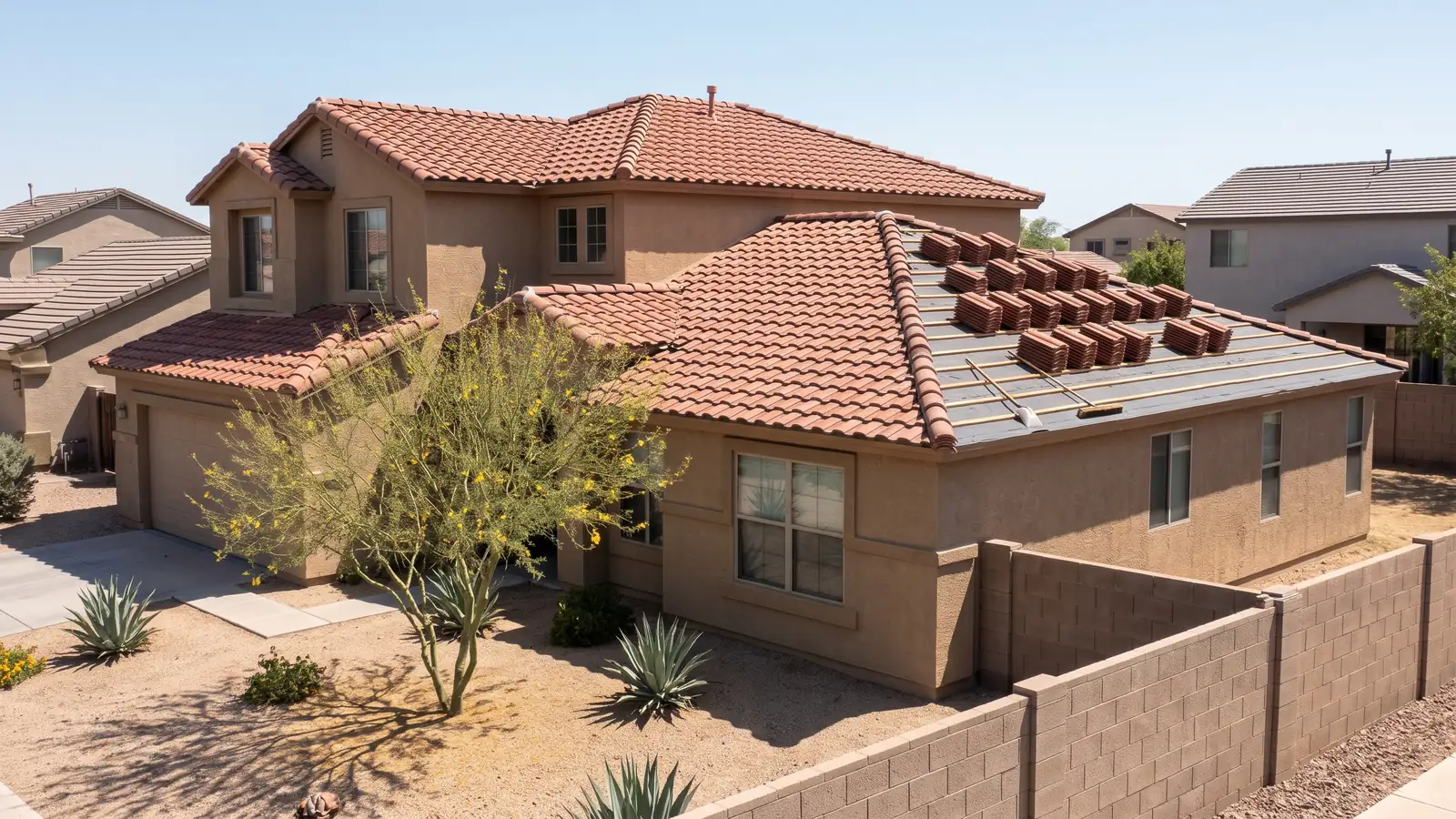
Tile roofing in Gilbert, AZ
Tile Roof Inspection in Gilbert, AZ
- Typical fee: HomeGuide puts a roof inspection at $100 to $400 on average nationally; adding a roof certification costs another $75 to $200.
- Home inspections: Arizona's home inspector standards of practice don't require the inspector to walk on the roofing or to look at solar systems.
- Local housing age: Census estimates place more than half of Gilbert's homes and apartments (56.6%) in the 1990-2009 build years, with a median build year of 2004.
Tile Roofing Gilbert is a free go-between for you and a local roofer when you need someone to look at the tile, the felt under it, or both. A visit to your address may cost more or less than those national averages. Saying up front whether it's for a purchase, a storm or an aging roof helps match the visit to the question.
Tile Roof Inspection Types
Each kind of visit answers a different question, and the right one depends on why you're asking.
Pre-Purchase Inspection and Roof Certification
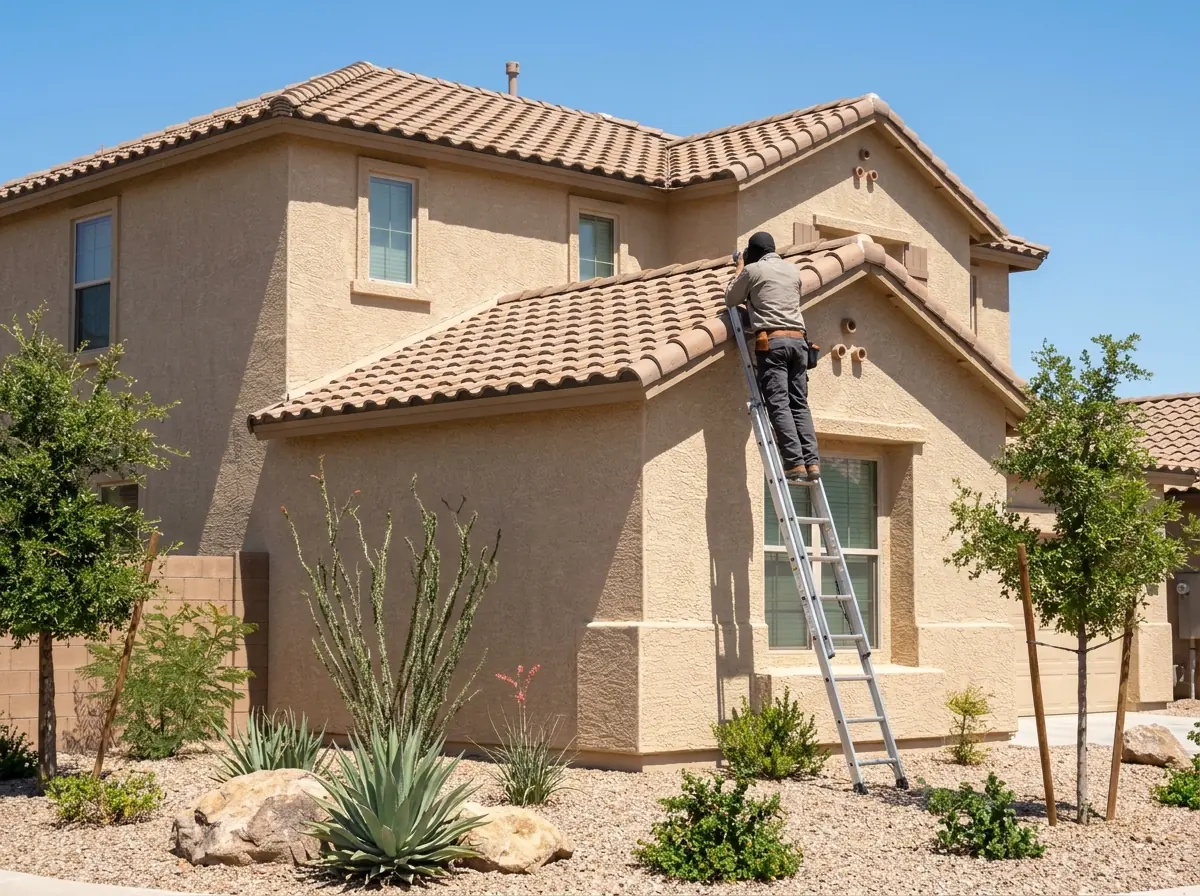
A general home inspection includes the roof, within limits. Arizona requires certified home inspectors to follow the Standards of Professional Practice adopted by the state's chapter of the American Society of Home Inspectors. Under those standards the inspector:
- observes the roof covering, drainage, flashings, skylights, chimneys, penetrations and signs of leaks;
- describes the covering and reports how the roof was inspected;
- is not required to walk on the roofing or observe solar systems.
A roof certification goes further. HomeGuide says it's issued only for a leak-free roof with 2 to 5 years of useful life left, after any repairs, and that many lenders want at least 3 years. On a resale, book the roofer early in the buyer's inspection window, not at the end of it.
Post-Storm Roof Check
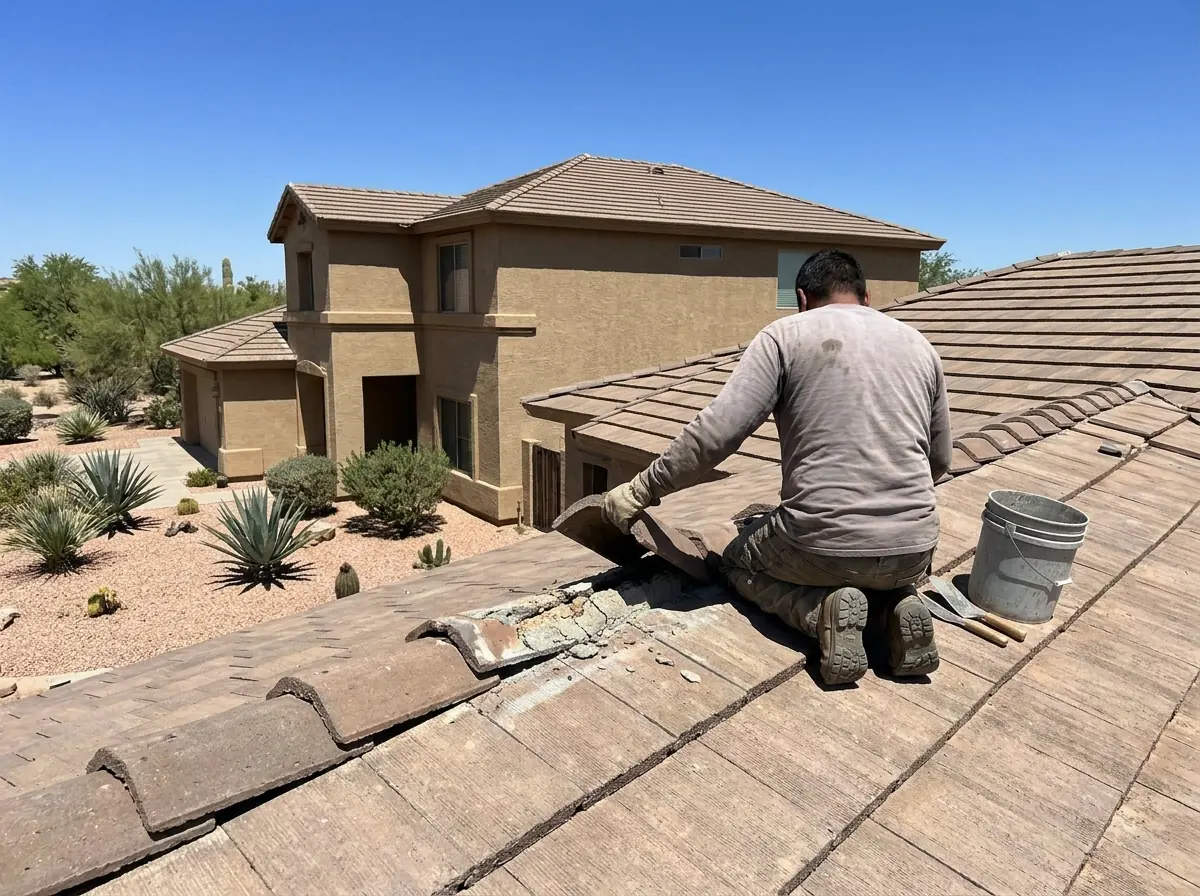
HomeGuide recommends a homeowner self-check twice a year and right after a significant storm, from the ground. A roofer's post-storm check adds the ridge, the eave courses and the valleys up close. If your insurer sends its own inspector, HomeGuide notes that visit costs you nothing but can affect premiums. What counts as storm damage, and the claim steps, are on the storm damage repair page.
Yearly Condition Check
Advice on frequency varies widely:
- Rosie on the House (Arizona): a roofer should inspect the roof once a year, and all roofs should be inspected and cleared of debris at least yearly.
- HomeGuide: every 3 to 5 years or after damage, in its tile roof cost guide; every 5 years for tile, in its inspection guide.
A practical rule: let the felt's age decide. A roof re-laid a few years ago can live at HomeGuide's interval. A roof on original underlayment from the 1990s or 2000s is the one to check every year, since that's where a small failure turns into a re-lay. What gets done between visits is under tile roof maintenance.
Re-Lay Assessment With Lifted Tiles
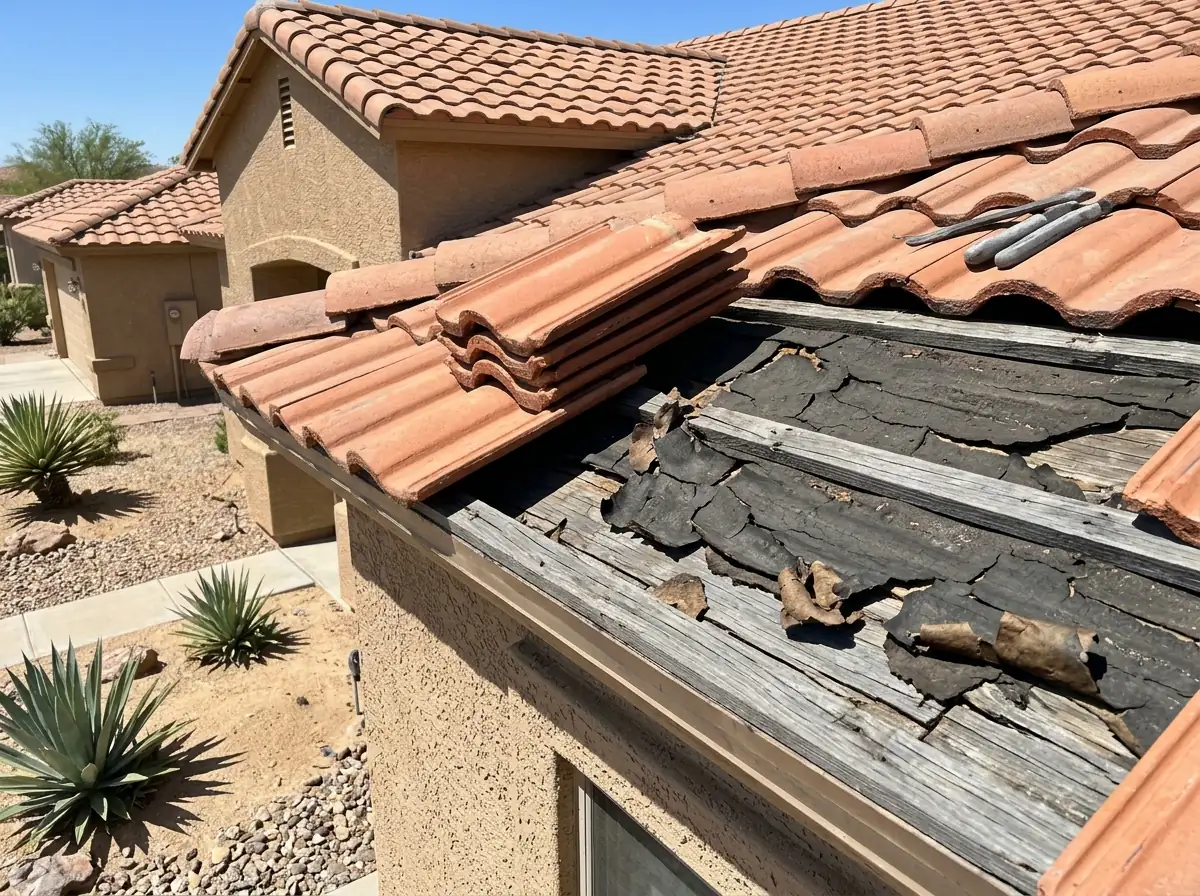
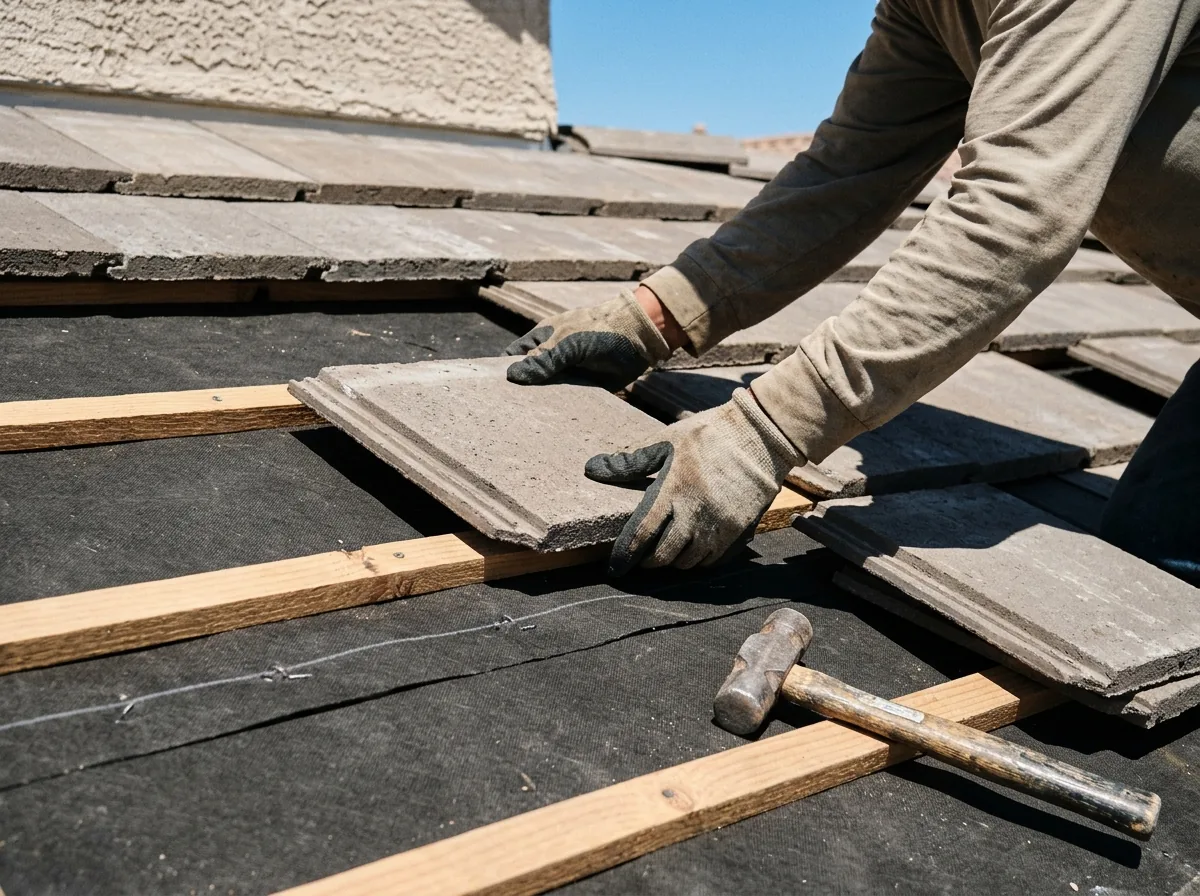
Felt condition isn't visible from the yard. Rosie on the House says tile roofs need investigative inspections of the underlayment and flashings. In practice that means lifting tiles; spots to check include valleys, eaves, and the areas around vents and pipes. Ask how many tiles will come up and where, who replaces any that crack, and for close-up photos of the felt at each spot. If it's brittle or torn through, the next step is underlayment replacement.
Written Photo Report
HomeGuide says a roof report explains the findings and includes repair estimates, arriving 1 to 2 business days after an inspection that takes from 45 minutes to several hours. The method changes the price and what it can see. HomeGuide's table by method lists a basic physical inspection below its $100 to $400 overall average:
- Physical inspection: $75 to $200, someone on the roof.
- Drone: $100 to $450, a view of the tile surface.
- Infrared: $400 to $600, thermal imaging that maps trapped moisture.
A drone sees tile, not felt, so for a tile roof the physical visit with lifted tiles usually tells you the most.
Why Gilbert homeowners and HOAs call Tile Roofing Gilbert
- One request goes to one roofer, never to a call list
- Free to send, with nothing to sign until you have a written price
- Ask to see the R-42 or CR-42 license number on the contract
- Ask how many replacement tiles the price allows for
- You pay nothing for the introduction
Tile Roof Inspection Report: What It Should Answer
A useful report on a tile roof covers:
- the tile material and profile, with broken or slipped tiles counted by slope;
- the underlayment at each lifted spot, with photos;
- valley metal, wall flashing and pipe flashing (flashing repair);
- ridge and hip caps;
- the attic side, where HomeGuide says most inspectors look for water intrusion (a separate attic inspection runs $200 to $500);
- a recommendation, repair, re-lay or replacement, with the reason;
- anything not inspected, such as tile under a solar array, and why.
If a report can't tell you what the felt looked like, it hasn't inspected a tile roof's weak point.
Frequently asked questions
My home inspector only looked at the tile from the ground. Is that normal?
It's allowed. Arizona's home inspector standards of practice require the inspector to observe the roof covering, flashings, penetrations and signs of leaks, and to report how the roof was inspected, but say the inspector is not required to walk on the roofing. If the house has original felt, a roofer who lifts a few tiles will tell you more.
The lender is asking for a roof certification. What is that?
A letter giving the roof's condition and expected life. HomeGuide calls it an expert opinion, not a guarantee against leaks. Its cost is in the fee figures at the top of this page, and the conditions for issuing one are under pre-purchase inspection and roof certification.
We just went under contract. When should the roof inspection happen?
In the first few days. The Arizona REALTORS resale contract gives the buyer 10 days after acceptance by default to finish inspections and send any disapproval notice, unless the parties write in a different period. The written report arrives after the visit (timing under written photo report), so book early in the window.
Can a drone inspection tell me whether the underlayment is worn?
Not really. A drone photographs the tile surface, and the underlayment sits under it. HomeGuide prices drone inspections at $100 to $450 and infrared scans, which look for trapped moisture, at $400 to $600. Felt condition still takes lifted tiles.
A roofer offered a free inspection. What's the catch?
Sometimes it's a sales visit. HomeGuide notes that some contractors offer free inspections hoping to win the job, and that a roofer benefits from finding damage while a home inspector has no stake in the repair. A free look can still be useful; ask for dated photos of everything they say is wrong.