
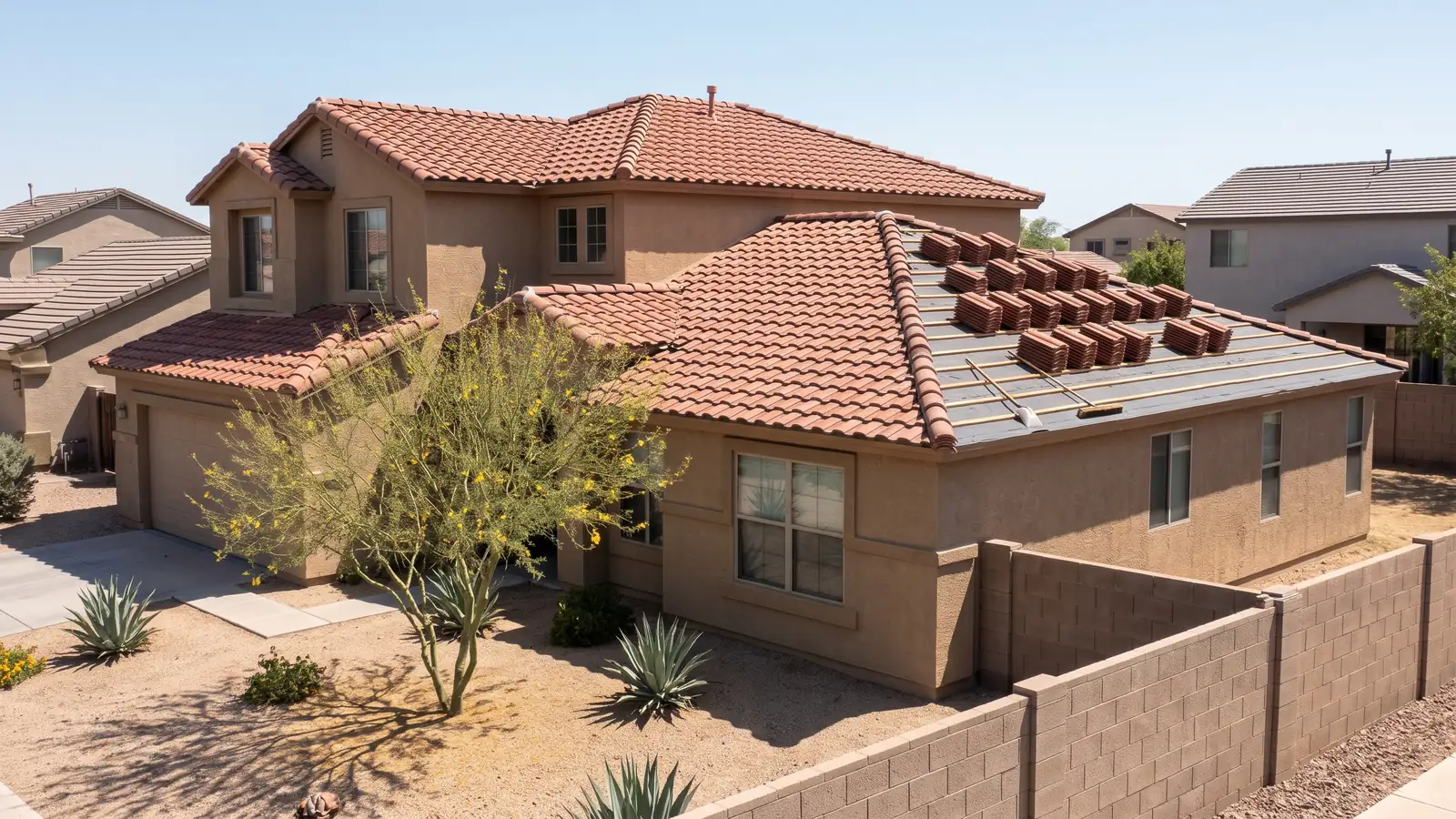
Tile roofing in Gilbert, AZ
Tile Roof Valley and Flashing Repair in Gilbert, AZ
- Typical repair range: HomeGuide's tile repair table lists damaged flashing at $200 to $1,700; its flashing guide breaks out valleys at $200 to $850 and vent pipes at $200 to $500.
- Valley metal by code: corrosion-resistant metal at least 0.019 inch (26 gauge), reaching 11 inches each side of center, with a 1-inch splash diverter rib.
- Under the valley: on slopes of 3:12 and steeper, a 36-inch strip of Type I underlayment runs the full length of the valley in addition to the other required underlayment.
- Laps: the code sets a 4-inch minimum end lap on flashing; the tile-industry manual laps valley metal 6 inches and keeps the tile at least 4 inches over it.
Tile Roofing Gilbert routes your request to one local roofer for the valley, wall or pipe that's letting water in. Expect a real repair price to differ from the national cost-guide ranges listed here. Where the stain shows inside, and which valley or wall sits above it, is the most useful thing to pass along.
Tile Roof Flashing Repair by Location
Tile sheds most of the water, but the metal at the joints does the hard part. Every place the roof changes direction or meets something else needs its own piece, and the 2018 code Gilbert enforces lists them: wall and roof intersections, changes in slope or direction, and roof openings, with a diverter where an eave meets a sidewall.
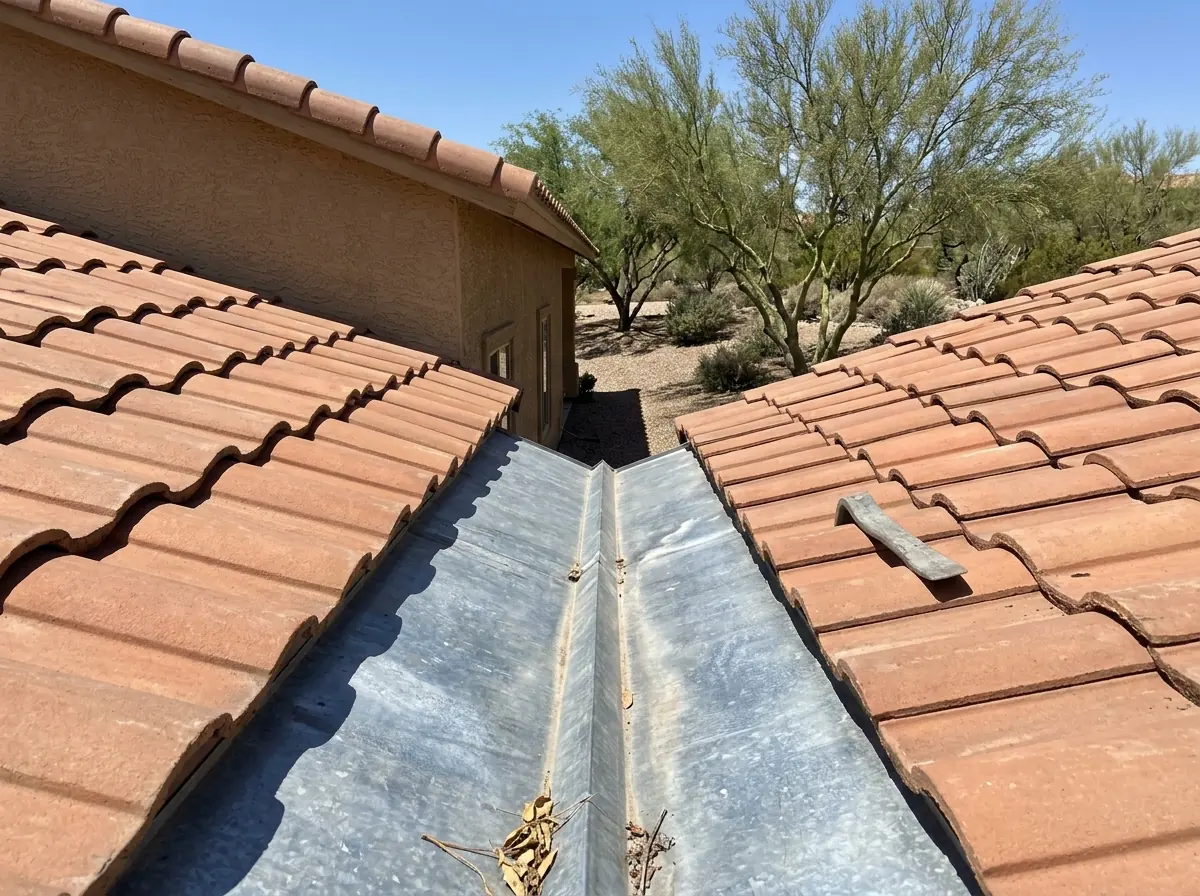
Open Metal Valleys
Two slopes drain into every valley, so leaves and dust collect there; HomeGuide lists that debris among the common reasons tile roofs leak. The manual allows the tile at a valley to be cut open, leaving the metal exposed down the middle, or closed. It shows single, double and triple crown profiles plus a deep-trough version.
- Width: at least 11 inches from the centerline each way, with a 1-inch rib (code).
- Metal: No. 26 galvanized sheet, 0.019 inch, G90 (manual).
- Joints: lapped 6 inches, each section blind-nailed at its upper end (manual).
- Flat tile, closed valley: a ribbed or single-crown valley metal with a batten extension (manual).
For tracing a leak back to a valley, see tile roof leak repair.
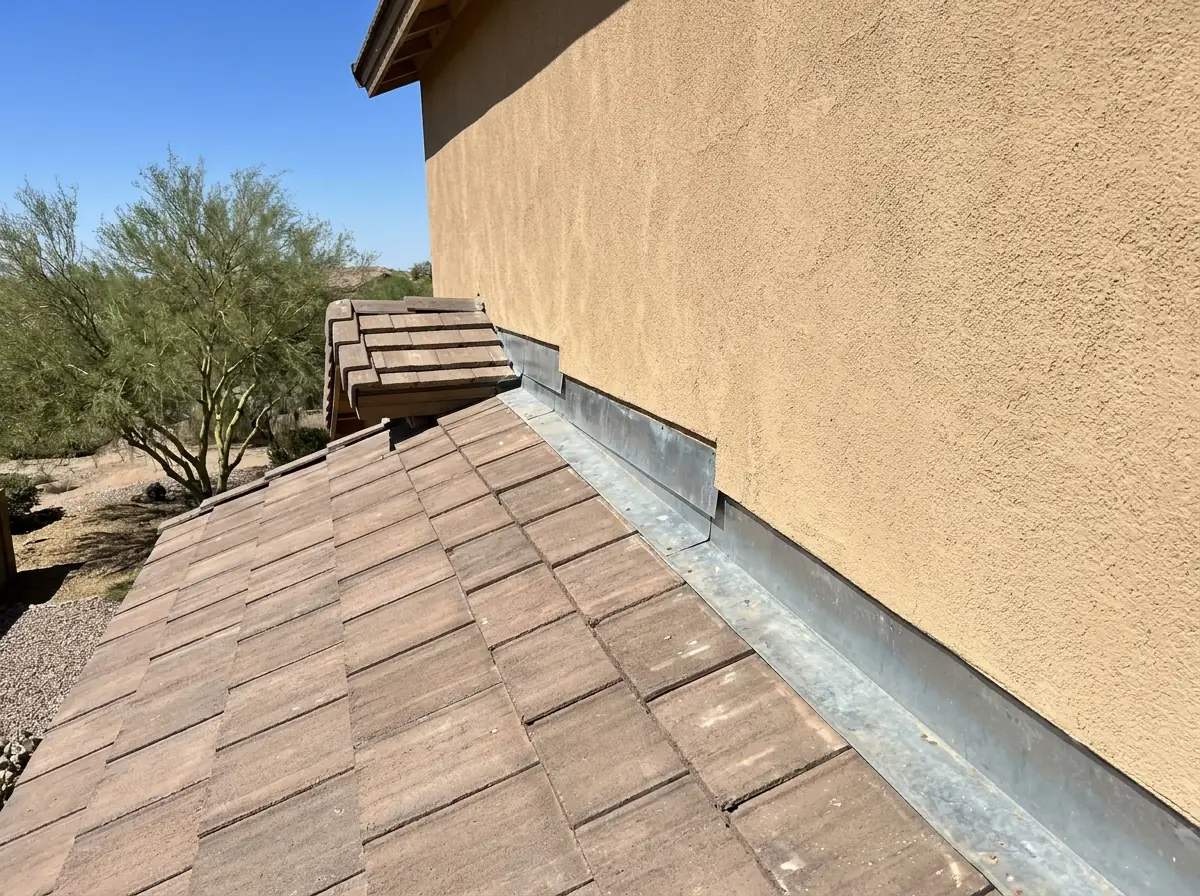
Headwall and Sidewall Flashing at Stucco
Where a tile slope runs into a second-story wall or a parapet, the joint needs a pan at the side and an apron at the head. The manual's minimums:
- Sidewall pan: 4 inches up the wall, about 6 inches out over the deck, with a 3/4-inch upturned return.
- Headwall: rigid or flexible flashing lapping at least 3 inches over the tile.
- Underlayment: turned at least 4 inches up the wall.
- Blocking: solid wood behind the pan and the Z-metal counterflashing.
The manual adds that surface-mounted flashing "may be sufficient in some mild climates," but recommends concealed Z-metal or a two-piece stucco reglet in wet climates, particularly with stucco walls. Whether a Gilbert house counts as mild or wet for this purpose is a judgment call to talk through with the roofer.
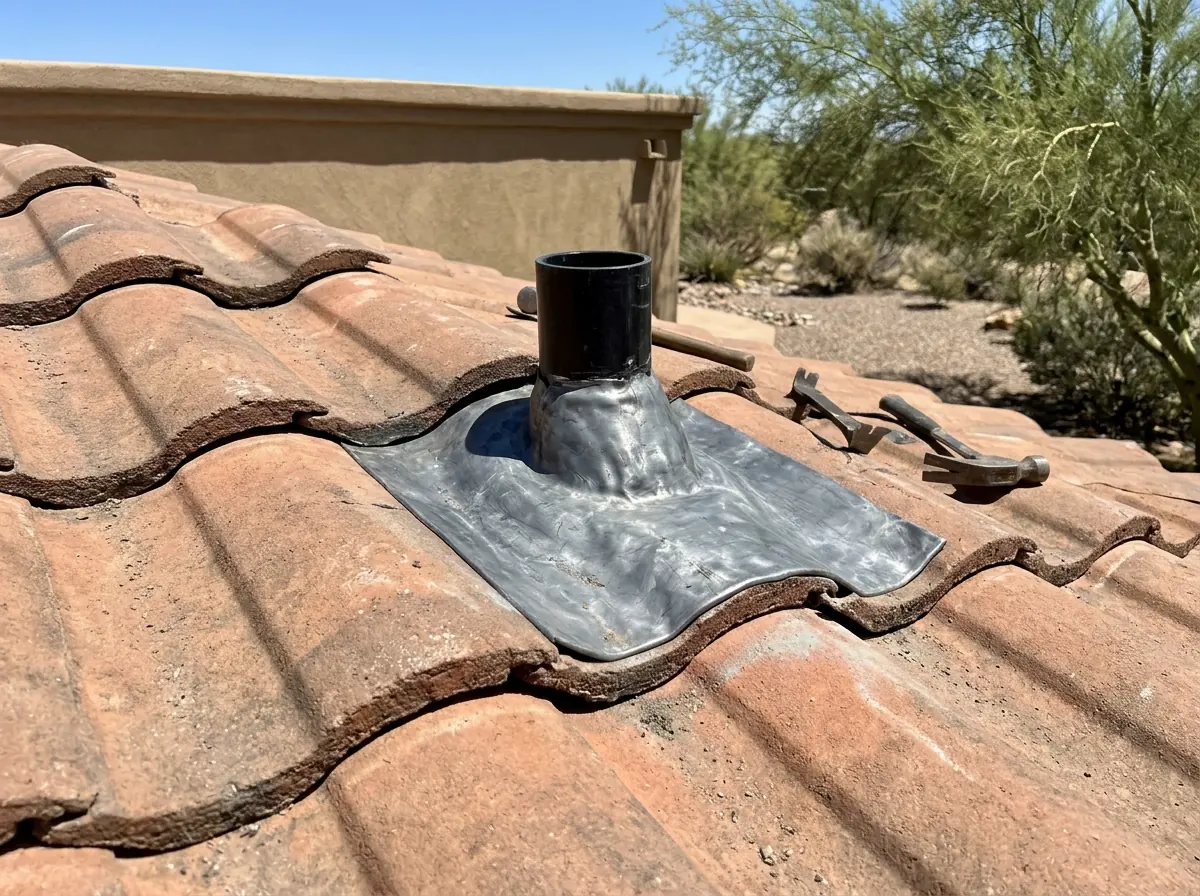
Pipe Jacks and Plumbing Vents
Plumbing vents need two flashings on tile: one at the deck and one at the tile, per the manual. On S-tile and other medium or high profiles, the top flashing has to be malleable so it can follow the curve:
- soft lead, at least 2.5 lb per square foot;
- dead-soft aluminum, at least 0.019 inch;
- soft copper, at least 16 oz per square foot.
Rubber pipe boots are a different story. HomeGuide gives vent boots 10 to 20 years and notes that rubber breaks down faster in hot, sunny climates. Attic vents are covered on tile roof ventilation.
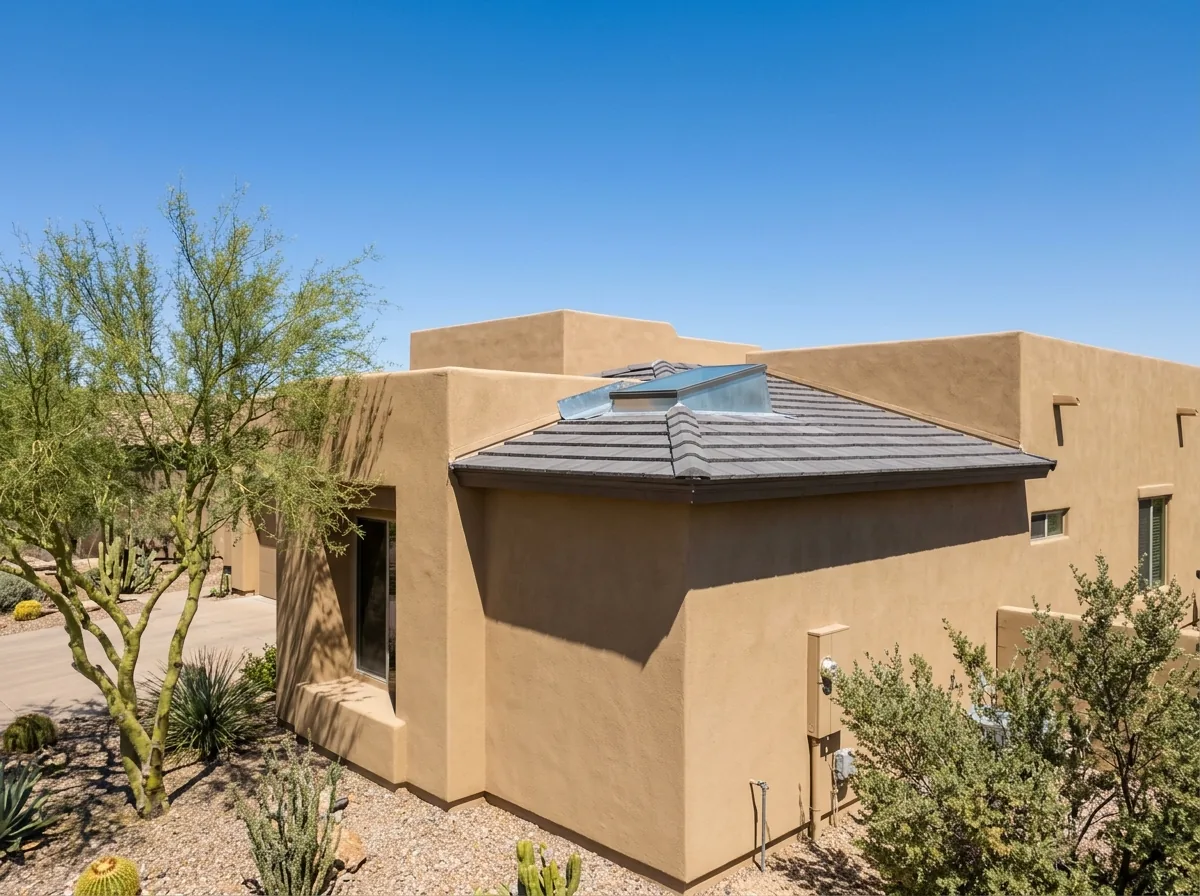
Skylight and Chimney Flashing
Code requires a cricket or saddle on the ridge side of any chimney or penetration wider than 30 inches, so water splits around it instead of pooling. Unit skylights flashed to the maker's instructions are the exception. For smaller openings the manual uses a backer or saddle flashing running at least 6 inches up the chimney, with underlayment turned 4 inches up. HomeGuide's flashing guide prices skylight flashing at $200 to $500 and chimney flashing at $200 to $1,000. Those are general roofing ranges, and lifting and resetting tile can add to them.
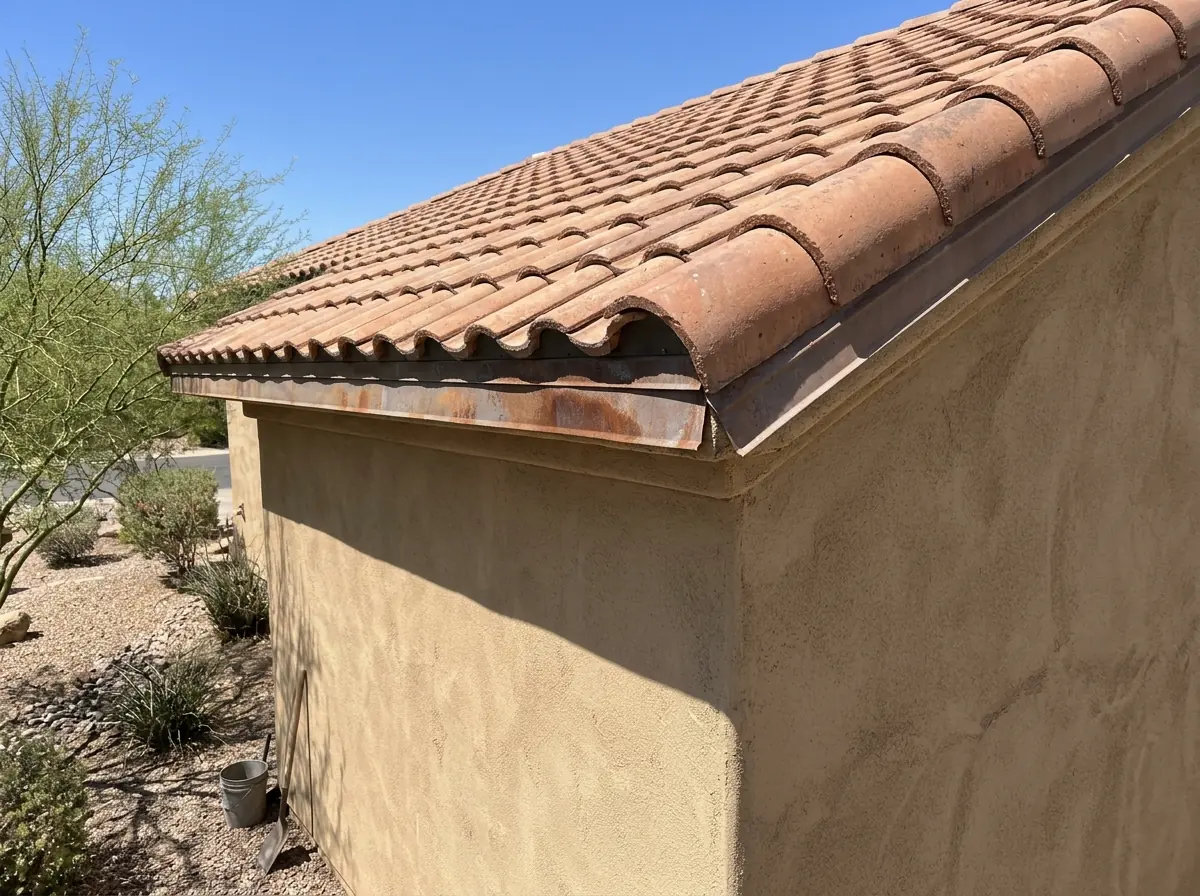
Drip Edge and Rake Metal
Here's a detail that surprises people: the IRC's drip-edge section is written for shingle roofs. For tile, it's the industry manual that requires an eave drip edge at every downslope edge. Its rake rules:
- Rake pan: at least 6 inches, sized to the water it carries.
- Height: the rake flashing and its nailer sit higher than the installed tile.
- Underlayment: at least 4 inches up the blocking or trim.
HomeGuide's drip edge range, $250 to $1,500, is a general roofing figure rather than a tile-specific one.
Why Gilbert homeowners and HOAs call Tile Roofing Gilbert
- One request goes to one roofer, never to a call list
- Free to send, with nothing to sign until you have a written price
- Ask to see the R-42 or CR-42 license number on the contract
- Ask how many replacement tiles the price allows for
- You pay nothing for the introduction
What Drives the Cost of a Flashing Repair
Flashing sits under tile, so the price follows how much tile has to come up to reach it.
Tile handling
Every lifted tile can crack. HomeGuide says that's part of why tile repairs cost more, and cracked pieces get swapped as on broken roof tile repair.Metal choice
HomeGuide gives aluminum and galvanized flashing about 20 to 30 years and copper 50 to 100.Scope creep
A valley that leaked for several seasons may have wet underlayment or decking below it; see decking replacement.Re-lay timing
If the felt is near the end of its life, a re-lay is when worn metal gets dealt with: the code requires flashings that are rusted, damaged or deteriorated to be replaced when tile is reinstalled. That rule lives on underlayment replacement.
Before signing, ask the roofer to mark on a photo which pieces of metal are being replaced, the gauge, and whether the valley underlayment strip is part of the price.